
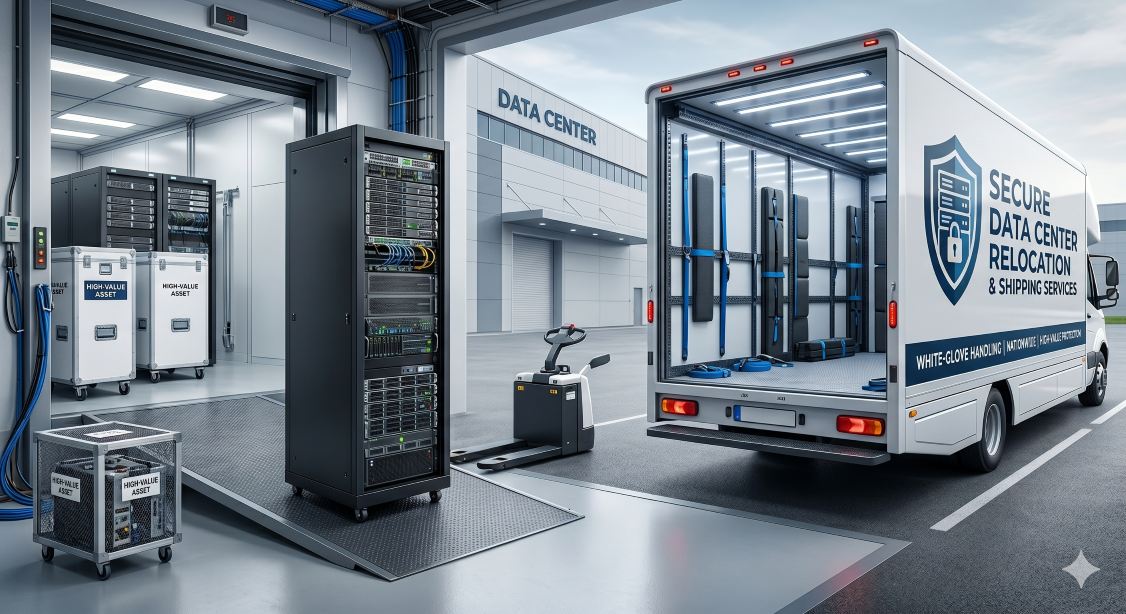
Equipment-specific planning
Reviewed for each shipment
Nationwide coverage
48 contiguous states
Specialized equipment
Matched to your freight
Explore Related Logistics Solutions
Coordinate connected equipment and project requirements through Exodus Logistix.
Data Center Transportation
Project logistics for mission-critical data center infrastructure.
View serviceModular Data Center Transportation
Staged delivery for prefabricated data halls and infrastructure modules.
View serviceIndustrial Generator Transportation
Coordinated logistics for standby and backup generation equipment.
View serviceSwitchgear Transportation
Transportation for electrical protection and distribution systems.
View serviceTransformer Transportation
Heavy haul and specialized transportation for power transformers.
View serviceServer Rack Transportation
Secure handling for the critical IT infrastructure UPS systems protect.
View serviceElectrical Equipment Transportation
Complete project support for mission-critical power systems.
View serviceHeavy Haul Transportation
Specialized trailers, permits, routing, and escort coordination.
View serviceOversized Transportation
Compliant transportation for over-dimensional electrical equipment.
View serviceUPS System Transportation Built Around Your Equipment
UPS system transportation requires careful planning because UPS cabinets, battery systems, PDUs, and integrated power modules are mission-critical, high-value equipment. Exodus Logistix coordinates what is being moved, why it requires specialized transportation, and how the move fits the facility or project schedule.
Our logistics specialists manage trailer selection, securement, carrier management, delivery appointments, loading and unloading requirements, and real-time communication for nationwide shipments.
Every shipment is personally reviewed so the transportation plan protects the equipment and supports the installation timeline.
- Trailer selection
- Project scheduling
- Carrier management
- Delivery appointments
- Real-time shipment communication
What Is a UPS System?
A UPS (Uninterruptible Power Supply) provides immediate backup power when utility service is interrupted. Unlike standby generators that require startup time, UPS systems instantly supply power to protect data centers, hospitals, telecommunications facilities, financial institutions, manufacturing plants, industrial control systems, government facilities, and emergency operations centers.
Because UPS equipment supports critical operations, transportation must be planned to prevent damage, delays, and installation disruptions. The system’s specifications, packaging, loading method, route, and receiving conditions determine the appropriate transportation strategy. Cabinets and battery systems may move as separate or integrated units, so packaging, orientation, vibration control, and site access are reviewed before dispatch. This protects uptime-critical equipment from damage while keeping installation milestones on track.
UPS Equipment We Transport
Exodus Logistix coordinates UPS system transportation for a wide variety of power protection equipment, from individual cabinets to complete mission-critical electrical packages.
UPS Systems
- UPS cabinets
- Modular UPS systems
- Static UPS units
- Parallel UPS systems
Supporting Power Equipment
- Battery cabinets
- Battery racks
- Power distribution units (PDUs)
- Remote power panels (RPPs)
- Static transfer switches
- Maintenance bypass cabinets
- Integrated UPS modules
- Electrical skids
- Prefabricated power rooms
- Containerized power systems
Industries We Support
UPS systems support mission-critical operations across multiple industries. Data centers are a primary focus because this page is part of the Data Center Transportation cluster.
- Data Centers — Hyperscale, enterprise, and colocation facilities rely on UPS systems for uninterrupted computing and construction milestones.
- Healthcare — Hospitals and medical campuses protect life-safety equipment, surgical suites, imaging systems, and emergency infrastructure.
- Telecommunications — Network operations centers and communications facilities require dependable backup power for continuous connectivity.
- Manufacturing — Production lines, automation systems, and sensitive equipment depend on stable power protection.
- Financial Institutions — Banks, trading centers, and financial data facilities require continuous power for mission-critical operations.
- Government & Critical Infrastructure — Agencies, defense facilities, and emergency operations centers depend on secure, reliable UPS systems.
UPS deliveries can be coordinated with Data Center Transportation and the related electrical infrastructure program.
Why UPS Systems Require Specialized Transportation
UPS systems are not standard freight. Transportation planning must account for sensitive electronics, battery systems, weight distribution, shock and vibration, securement, weather protection, loading and unloading, indoor receiving, delivery appointments, and installation schedules.
- Sensitive electronics
- Battery systems
- Weight distribution
- Shock and vibration reduction
- Securement
- Weather protection
- Loading and unloading
- Indoor receiving
- Delivery appointments
- Installation schedules
Transportation Equipment for UPS Systems
Equipment selection depends on weight, dimensions, packaging, sensitivity, loading method, and delivery requirements. Not every UPS shipment requires an air-ride or specialized trailer; the appropriate equipment is selected after the shipment is reviewed.
- Enclosed Dry Van Trailers — May provide complete weather protection for packaged UPS equipment.
- Air-Ride Dry Vans — May reduce road vibration for sensitive electronic equipment.
- Conestoga Trailers — May support overhead loading while maintaining weather protection.
- Flatbed Trailers — May suit larger skids or equipment designed for open-deck transportation.
- Step Deck Trailers — May provide additional height clearance for taller systems.
- Heavy Haul Equipment — May suit oversized modular power systems or integrated electrical rooms requiring specialized trailers and permits.
For heavier or over-dimensional power packages, coordinate the move with Heavy Haul Transportation and Oversized Transportation planning when the shipment requires it.
UPS Transportation Challenges We Solve
UPS deployments can involve heavy cabinets, sensitive electronics, batteries, constrained facilities, and installation crews working to a fixed schedule. We coordinate the transportation details that make a delivery workable at the destination.
- Heavy UPS cabinets
- Sensitive electronics
- Battery handling
- Limited dock access
- Indoor delivery
- Jobsite restrictions
- Tight delivery windows
- Construction schedules
- Multi-unit deployments
- Coordination with installation teams
Data Center UPS Transportation & Logistics
Within a Data Center Transportation program, UPS deliveries may include multiple cabinets, battery systems, modular electrical rooms, and power distribution equipment delivered around construction and commissioning milestones.
- Hyperscale data center deployments
- AI data center infrastructure
- Phased equipment deliveries
- Multiple UPS cabinets and battery systems
- Crane or lift coordination where required
- Electrical contractor coordination
- Installation sequencing
- Warehouse-to-site delivery
- Commissioning schedules
- Just-in-time delivery and shipment visibility
The plan can be sequenced with Industrial Generator Transportation, Switchgear Transportation, and Transformer Transportation.
Project Logistics for Mission-Critical Infrastructure
UPS transportation is often one component of a larger infrastructure project. Exodus provides consistent coordination from planning through final delivery for projects ranging from five shipments to five hundred.
- Transportation planning
- Carrier procurement
- Scheduling
- Construction coordination
- Delivery sequencing
- Appointment management
- Tracking and shipment visibility
- Heavy haul coordination when required
For complete electrical packages, connect UPS system transportation with Electrical Equipment Transportation and Server Rack Transportation.
Why Choose Exodus for UPS System Transportation?
- Equipment-specific transportation planning
- Nationwide specialized carrier network
- Mission-critical project experience
- Data center logistics expertise
- Project scheduling
- Shipment visibility
- Dedicated logistics coordination
We understand that UPS system transportation protects critical infrastructure and supports successful project execution—not simply freight movement.
Request a UPS System Transportation Quote
UPS system transportation pricing depends on UPS type, weight, dimensions, quantity, pickup and delivery locations, equipment requirements, loading and unloading conditions, and delivery schedule. Share the shipment details so our logistics team can recommend the appropriate transportation solution.
- Pickup location
- Delivery location
- UPS type
- Manufacturer/model
- Number of units
- Weight
- Dimensions
- Photos
- Packaging
- Loading requirements
- Unloading requirements
- Pickup date
- Delivery date
- Project details
How UPS System Transportation Works
- 1
Share Your Equipment Details
Provide equipment type, quantity, weight, dimensions, locations, dates, and loading requirements.
- 2
Review Transportation Requirements
We assess handling, access, packaging, equipment, and scheduling requirements.
- 3
Select Transportation Equipment
We match the shipment with the appropriate trailer and qualified carrier.
- 4
Coordinate Pickup & Delivery
We schedule transportation around facility access, project milestones, and receiving requirements.
- 5
Monitor the Shipment
We maintain communication and shipment visibility through final delivery.
Frequently Asked Questions
How are UPS systems transported?
UPS systems are transported using equipment, packaging, securement, routing, and receiving plans matched to their dimensions, weight, sensitivity, loading method, and delivery requirements.
What types of UPS systems can you transport?
Exodus coordinates UPS cabinets, modular UPS systems, static UPS units, parallel UPS systems, battery cabinets and racks, PDUs, RPPs, static transfer switches, bypass cabinets, electrical skids, prefabricated power rooms, and containerized power systems.
Can you transport populated UPS cabinets?
Yes. Populated UPS cabinets can be reviewed for the appropriate packaging, securement, vibration protection, trailer, loading method, and receiving conditions.
What type of trailer is used for UPS transportation?
Depending on weight, dimensions, packaging, sensitivity, loading method, and delivery requirements, UPS equipment may move on an enclosed dry van, air-ride dry van, Conestoga, flatbed, step deck, or heavy haul trailer.
Do UPS systems require specialized transportation?
UPS systems may require specialized planning because of sensitive electronics, batteries, weight distribution, shock and vibration concerns, securement, weather protection, and indoor or appointment-based receiving.
Can you transport UPS systems for data center projects?
Yes. Exodus coordinates phased UPS deliveries for data centers around construction schedules, electrical contractors, installation sequencing, crane or lift requirements, warehouse-to-site moves, and commissioning.
Can you transport UPS battery cabinets and related equipment?
Yes. We coordinate battery cabinets, battery racks, PDUs, RPPs, static transfer switches, maintenance bypass cabinets, electrical skids, and related power equipment according to the shipment requirements.
What information is needed for a UPS transportation quote?
Provide pickup and delivery locations, UPS type, manufacturer or model, number of units, weight, dimensions, photos, packaging, loading and unloading requirements, dates, and project details.