
Flatbed Freight Quote Requests
Use our flatbed quote page to compare trailer options, share shipment dimensions, and request faster pricing for open-deck freight.
View flatbed freight quote pageDetails to include
Safe & Reliable Oversized Freight Transportation
At Exodus Logistix, oversized transportation is more than moving heavy freight — it is the careful coordination of permits, specialized equipment, route engineering, and regulatory compliance. Whether you are shipping a single piece of construction equipment or managing a multi-load infrastructure project, our heavy haul logistics team delivers end-to-end oversight that protects your cargo, your timeline, and your budget.
Our network spans all 48 contiguous states, with particularly strong oversized transportation execution across California, Northern California, the West Coast, Texas, the Midwest, and the Southeast. We handle every detail so your team can stay focused on execution — not logistics.
What Is Oversized Transportation?
Oversized transportation refers to the movement of freight that exceeds the standard legal dimensions and weight limits set by the U.S. Department of Transportation and individual state agencies. Because these loads cannot travel on standard highways without special accommodations, every oversized shipment requires a carefully engineered logistics plan.
A shipment becomes oversized when it exceeds any of the following federal thresholds: width over 8 feet 6 inches, height over 13 feet 6 inches, length over 48 to 53 feet, or gross vehicle weight over 80,000 pounds. Individual states may have stricter or slightly different rules, which means compliance must be managed on a route-by-route basis.
Beyond dimensions, oversized load classifications include wide loads, superloads, and heavy haul categories. Each classification triggers specific requirements for permits, escort vehicles, travel time restrictions, and equipment specifications. Our team navigates these classifications daily, ensuring every shipment is fully compliant from origin to delivery.
Width
8 ft 6 in
Height
13 ft 6 in
Length
48–53 ft
(varies by state)
Weight
80,000 lbs
gross
What Types of Oversized Freight Do We Transport?
From industrial machinery to energy infrastructure, we have the expertise and equipment to handle your most challenging oversized transportation needs.
Construction Equipment
Bulldozers, excavators, cranes, and other heavy construction machinery require specialized trailers, securement, and route planning to navigate roads safely and legally.
Industrial Machinery
Presses, CNC machines, turbines, and transformers demand precision loading, balanced weight distribution, and protective transit to prevent damage to sensitive components.
Manufacturing Equipment
Assembly lines, robotics, and custom manufacturing systems are moved with protective crating, climate considerations, and rigging coordination.
Modular Buildings
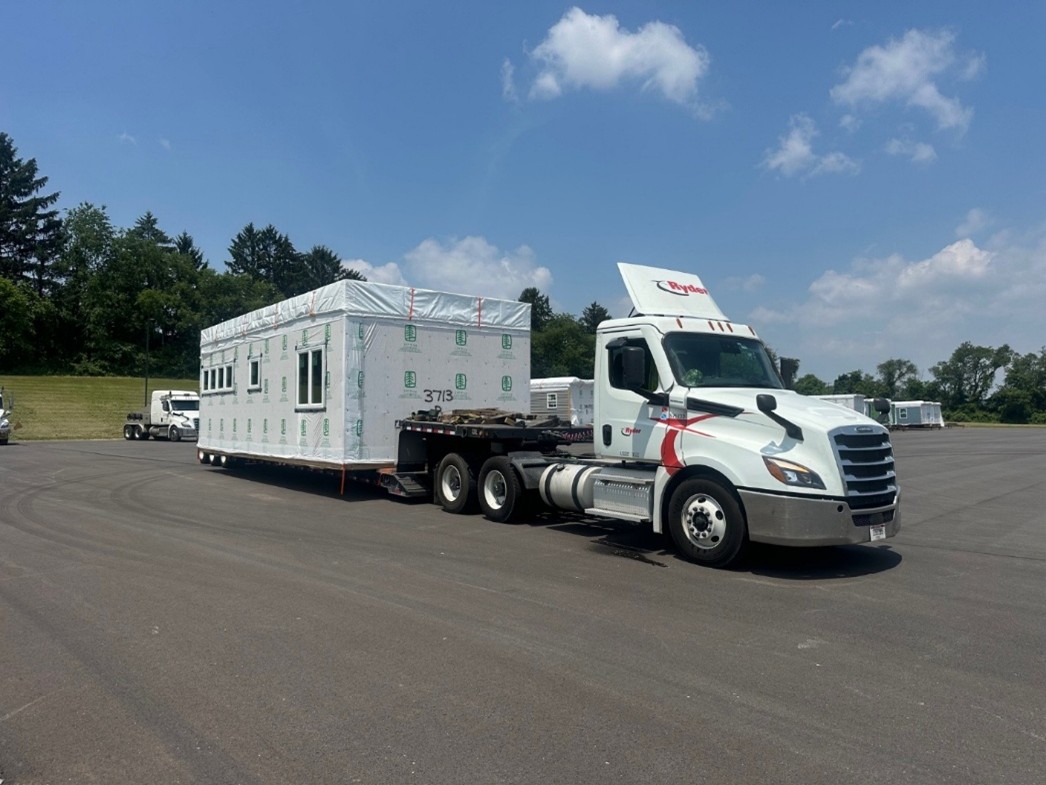
Prefab and modular structures such as offices, classrooms, and housing units are moved with care, secured against wind stress, and precisely aligned for installation.
Energy Infrastructure
Wind turbine blades, solar arrays, generators, and substation equipment require route engineering, oversized permits, and sometimes police escorts.
Agricultural Equipment
Combines, tractors, and harvesters are transported during tight seasonal windows, requiring rapid permitting and flexible scheduling.
Large Commercial Equipment
Oversized HVAC units, commercial boilers, and retail fixtures are handled with lift-gate coordination and building-site delivery precision.
Our Oversized Transportation Process
A proven, step-by-step methodology that reduces risk and keeps complex shipments on schedule.
Project Evaluation
We review dimensions, weight, center of gravity, and destination requirements. Our team identifies regulatory constraints and delivery site access challenges before any equipment is dispatched.
Route Planning & Surveys
Our logistics engineers analyze bridge clearances, weight restrictions, sharp turns, and seasonal road conditions. When necessary, we conduct physical route surveys to confirm safe passage.
Permit Acquisition
We prepare and submit all state, county, and municipal permits. For superloads, we handle engineering reviews, utility coordination, and night-or-weekend travel authorizations.
Escort Vehicle Coordination
Pilot cars, pole cars, and law enforcement escorts are scheduled precisely to match travel windows. Our dispatch maintains real-time communication with all escort teams.
Specialized Equipment Selection
From RGN trailers to multi-axle dolly systems, we match the trailer configuration to your cargo’s exact needs, ensuring stable loading and safe transit.
Delivery & Site Coordination
Final mile planning includes crane support, ground preparation, and direct coordination with on-site project managers. We don’t just drop freight—we ensure it’s positioned for immediate use.
Permits & Regulatory Compliance
Compliance is not optional — and it is one of the first concerns every shipper has about oversized transportation.
State Permits
Every state crossed requires its own oversize or overweight permit. We prepare applications, pay fees, and track approvals so your shipment never waits on paperwork.
DOT Regulations
We ensure compliance with federal DOT rules including bridge formulas, axle weight limits, and hours-of-service regulations for drivers.
Escort Requirements
Pilot car rules change by state and by load size. We pre-book certified escorts and maintain GPS coordination between all vehicles.
Travel Restrictions
Night travel, weekend restrictions, and holiday blackout periods vary widely. We build travel windows into your project plan from day one.
Route Approvals
Some states require engineering department approval for superloads. We submit detailed drawings and load diagrams to accelerate the process.
Insurance & Liability
Oversized shipments carry higher liability. We verify carrier insurance levels and can arrange supplemental coverage when needed.
Specialized Equipment for Oversized Freight
The right trailer configuration makes the difference between a safe delivery and a compliance violation. We match equipment precisely to your cargo.
Flatbed Trailers
Versatile platforms for large, irregularly shaped loads that can be exposed to weather. Ideal for machinery and equipment with durable surfaces.
Step Deck Trailers
Lower deck height allows taller cargo to clear height restrictions without superload classification. A go-to choice for construction and agricultural equipment.
RGN Trailers
Removable gooseneck trailers let heavy equipment drive directly onto the deck using ramps. Essential for self-propelled machinery.
Lowboy Trailers
Maximum deck height clearance for extremely tall or heavy loads. Often paired with booster axles to stay within weight-per-axle laws.
Multi-Axle Equipment
For superloads exceeding standard weight limits, multi-axle configurations distribute weight across more tires, keeping the shipment legal and safe.
Industries We Support
Our oversized transportation services serve a wide range of industries with heavy, complex, and high-value freight.
Construction
Manufacturing
Energy & Utilities
Infrastructure Projects
Agriculture
Modular Construction
Oversized Transportation Across Major U.S. Markets
We provide oversized transportation services with regional expertise and nationwide reach.
California
Expert oversized freight coordination through complex urban and mountain routes with strict state permitting.
Northern California
Bay Area and Sacramento Valley heavy haul logistics for construction, energy, and industrial projects.
West Coast
Coordinated permitting across Oregon, Washington, and California for seamless regional oversized moves.
Texas
Energy corridor heavy equipment transport with strong relationships in oil, gas, and wind infrastructure markets.
Midwest
Manufacturing and agricultural equipment hauls connecting Detroit, Chicago, and distribution hubs.
Southeast
Construction and infrastructure equipment moves across Florida, Georgia, and the Carolinas.
What Makes Oversized Transportation Different?
Oversized shipping requires specialized logistics that go far beyond standard freight. Here's a quick comparison.
| ✦ Oversized Transportation | Standard Freight | |
|---|---|---|
| Permits Required | State + local permits mandatory | Generally none for legal loads |
| Escort Vehicles | Often required by law | Not applicable |
| Route Planning | Engineered route surveys required | Standard GPS routing |
| Equipment Needed | Specialized trailers (RGN, lowboy, multi-axle) | Standard dry van or flatbed |
| Project Complexity | High — multi-day planning typical | Low to moderate |
| Cost | Higher — permits + escorts + equipment | Standard FTL rates |
| Transit Speed | Slower — restricted travel windows | Predictable transit times |
Why Choose Exodus Logistix?
We built our oversized transportation practice on accountability, expertise, and operational discipline.
Oversized freight expertise
Our team includes former heavy-haul drivers and project managers who understand load securement, bridge laws, and DOT enforcement patterns firsthand.
Permit coordination
We maintain relationships with permitting offices in all 48 contiguous states. That means faster turnaround and fewer surprises.
Route planning capabilities
We use satellite imagery, GIS mapping, and physical surveys to confirm that your load can travel the planned route without delay.
Nationwide carrier network
Access to vetted heavy-haul carriers with the right trailers, insurance, and safety records for your project.
Dedicated project management
A single point of contact tracks your shipment from planning through delivery, keeping all documentation organized.
Real-time communication
You receive proactive status updates, permit confirmations, and exception alerts before you have to ask.
Oversized Transportation — Common Questions
Answers to the most common questions about oversized transportation, permitting, and project logistics.
What qualifies as an oversized load?
A load is considered oversized when it exceeds standard legal dimensions: typically more than 8 ft 6 in wide, 13 ft 6 in high, 48–53 ft long, or over 80,000 lbs gross vehicle weight. Exact limits vary by state and route.
Do oversized shipments require permits?
Yes. Every state requires permits for oversized and overweight loads. Exodus Logistix manages the entire permitting process, including superload permits, route surveys, and escort coordination.
When are escort vehicles required?
Escort vehicles (pilot cars) are typically required when a load exceeds certain width, height, or length thresholds, or when traveling through congested or hazardous routes. Requirements vary by state.
What types of equipment can you transport?
We transport construction equipment, industrial machinery, manufacturing equipment, energy infrastructure components, agricultural equipment, modular buildings, and large commercial equipment.
Can you handle multi-state oversized shipments?
Absolutely. We coordinate multi-state oversized transportation with full compliance across all jurisdictions, managing permits, route surveys, and escorts for seamless nationwide delivery.
How is oversized freight pricing calculated?
Pricing depends on dimensions, weight, distance, permit fees, escort requirements, route complexity, and specialized equipment needs. We provide detailed, transparent quotes for every project.
What trailer types are used for oversized transportation?
We use flatbed trailers, step deck trailers, RGN (removable gooseneck) trailers, lowboy trailers, and multi-axle equipment. The right trailer is selected based on load dimensions, weight, and route requirements.
Do you coordinate route planning and permits?
Yes. Route planning and permit acquisition are core parts of our oversized transportation services. Our team handles every detail from pre-trip surveys to final site coordination.