
How Are Heavy Transformers Transported? Equipment & Permits
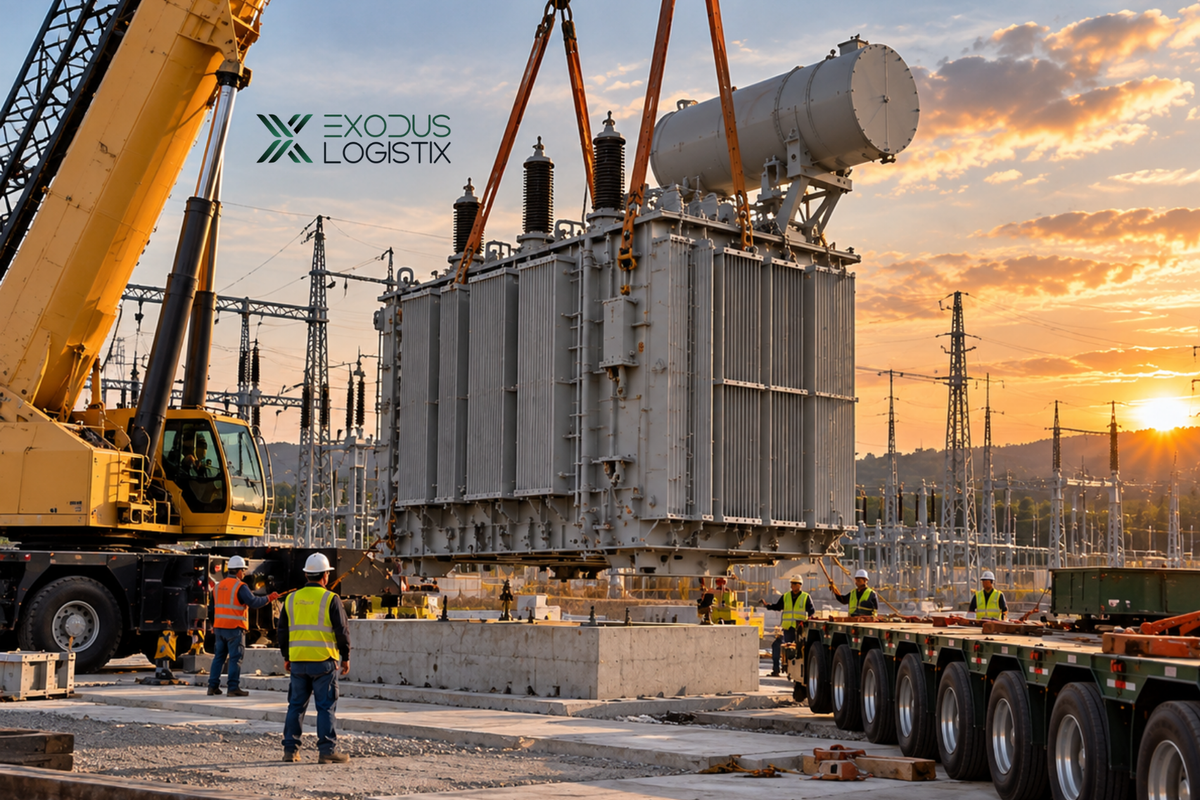
How Are Heavy Transformers Transported To Utility And Data Center Projects?
Quick Answer
Many people assume a transformer moves like any other heavy piece of equipment.
Load it. Strap it down. Drive it to the site.
In reality, transformer transportation rarely works that way.
Transformers can be oversized, extremely heavy, high-value, and critical to the project waiting for them. Weight, dimensions, and center of gravity all shape how one can move.
The challenge isn’t the distance.
The challenge is matching the equipment, route, permits, and delivery conditions to a piece of equipment the whole project depends on.
For many utility, industrial, and data center projects, equipment-specific planning is where transformer transportation creates the greatest value.
Transformers Don’t Move Like Standard Freight
A standard shipment follows a simple path.
A transformer depends on the equipment itself.
Whether it weighs a few thousand pounds or several hundred thousand pounds, a transformer brings challenges a standard load doesn’t:
- Oversized dimensions
- Extreme weight
- High value
- A critical role in the project schedule
Transformer transportation requires a plan built around the equipment, the project schedule, the route, and the delivery conditions.
What Determines How A Transformer Moves
Transformer transportation requirements can vary significantly from one shipment to the next.
The plan depends on:
- Weight
- Dimensions
- Center of gravity
- Loading method
- Route
- Legal limits
- Delivery location
These details determine the appropriate trailer, securement, permits, route review, and unloading plan.
At Exodus Logistix, every transformer shipment is personally reviewed so the safest, most efficient, and cost-effective transportation strategy is selected before the transformer moves.
Not Every Transformer Needs Heavy Haul Equipment
Equipment selection depends on the transformer’s dimensions, weight, center of gravity, loading method, route, and delivery requirements.
Depending on the shipment, the options may include:
- Flatbed trailers, which may suit legal-dimension transformers with suitable loading and securement conditions
- Step deck trailers, which may provide additional height clearance for taller transformers
- Double drop trailers, which may provide a lower well for equipment that needs additional deck clearance
- RGN trailers, which may support heavy equipment and ground-level or crane loading
- Multi-axle heavy haul equipment, which may distribute exceptional weight across additional axles
Not every transformer requires heavy haul equipment.
The appropriate option is selected after a shipment review.
Route Surveys, Permits, And Escorts Come Before The Truck
Transformers that exceed legal weight or dimensions may require permits and escort vehicles.
Requirements vary by route and loaded configuration, so they’re reviewed for each move.
A well-managed shipment typically includes:
- Route surveys
- Bridge clearance review
- Oversize permits
- Escort coordination
- Weight distribution planning
For route and permit coordination beyond the transformer move, see heavy haul transportation and oversized transportation.
Delivery Has To Fit The Jobsite
Getting a transformer to the site is only part of the job.
The delivery plan also has to account for:
- Loading and unloading methods
- Lift planning
- Crane coordination
- Weather protection
- Receiving site conditions
Data center projects add another layer. Construction often requires multiple transformer deliveries timed to electrical infrastructure delivery, installation sequencing, and construction milestones.
Phased deliveries have to line up with crane appointments, electrical contractors, and commissioning milestones.
When timing slips, the impact can reach the crane schedule, the installation sequence, and the milestones that follow.
At Exodus Logistix, we coordinate the transportation plan around the transformer, the project schedule, and the delivery conditions. To get a shipment reviewed, request a transformer quote with the transformer type, dimensions, weight, locations, photos or drawings, loading details, and schedule.
ETI Observation: The Best Transformer Deliveries Are Uneventful
The transformer arrives.
The crane is ready.
The lift goes as planned.
Nobody sees the route survey, the permit work, the weight distribution review, and the scheduling behind it.
The most effective transformer moves are planned around the equipment before it leaves the origin.
Success isn’t always measured by how problems are solved.
Often, it’s measured by the problems that never reach the jobsite.
One Transformer Rarely Means One Shipment
Large infrastructure projects rarely involve a single shipment.
Many require multi-transformer transportation programs that run over weeks or months.
A coordinated program typically includes:
- Transportation planning
- Carrier procurement
- Route analysis
- Permits
- Shipment sequencing
- Delivery scheduling
- Project communication
The objective is a transportation plan that supports the project instead of delaying it.
For more on how multi-shipment programs work, see our guide to when a shipment needs project logistics.
Why Businesses Work With Exodus Logistix
At Exodus Logistix, transformer transportation is built around the equipment, the project schedule, the route, and the delivery conditions.
We provide:
- Equipment selection
- Route planning and permits
- Specialized carrier coordination
- Shipment tracking
- Project scheduling
We coordinate moves for:
- Pad-mounted, dry-type, and oil-filled transformers
- Distribution, power, and utility transformers
- Generator step-up (GSU) transformers
- Substation and mobile substation transformers
- Renewable energy, data center, and industrial transformers
We support:
- Electric utilities, including substations, grid expansion, and emergency replacements
- Data center and hyperscale campus projects
- Renewable energy projects, including solar, wind, and battery energy storage
- Manufacturing plant expansions
- Commercial construction
- Government and infrastructure projects
Energy infrastructure projects can also be coordinated through energy logistics.
Our objective is simple:
Help project teams move transformers with equipment-specific planning, clear communication, and accountable execution, from origin to installation.
Frequently Asked Questions
How are transformers transported?
Transformers move on equipment and securement matched to their weight, dimensions, center of gravity, loading method, route, and delivery conditions. Each shipment is reviewed before the plan is set.
What type of trailer is used to transport transformers?
Depending on the shipment, a transformer may move on a flatbed, step deck, double drop, RGN, or multi-axle heavy haul trailer. The right choice comes from reviewing the transformer’s specifications.
Do transformer shipments require permits or escorts?
Transformers that exceed legal weight or dimensions may require permits and escort vehicles. Requirements vary by route and loaded configuration, so they’re reviewed for each move.
Can transformers be transported for data center projects?
Yes. Transformer deliveries for data center projects can be phased around construction schedules, crane appointments, installation sequencing, electrical contractors, and commissioning milestones.
Final Thoughts
The question is not whether a transformer can be moved.
The question is whether the move was planned around the transformer.
As weight, dimensions, and project schedules vary, transportation decisions become less about the truck and more about the equipment.
Equipment-specific planning exists because transformer requirements vary so much from one shipment to the next, and a plan built for one rarely fits another.
At Exodus Logistix, we believe the best transformer moves begin by understanding the equipment first, because when the trailer, route, and delivery plan match the transformer, a smooth delivery tends to follow.
Need Help Planning A Transformer Move?
Share your transformer type, dimensions, weight, pickup and delivery details, and project timeline. Our logistics team will review the shipment and recommend a transportation plan.
Learn more:
Tags

About the Author
exodus logistix
Exodus Logistix provides freight and logistics solutions built on disciplined planning, clear coordination, and operational accountability. With experience supporting complex shipments across multiple industries, the team focuses on reducing disruption, improving reliability, and helping businesses move freight with confidence.