
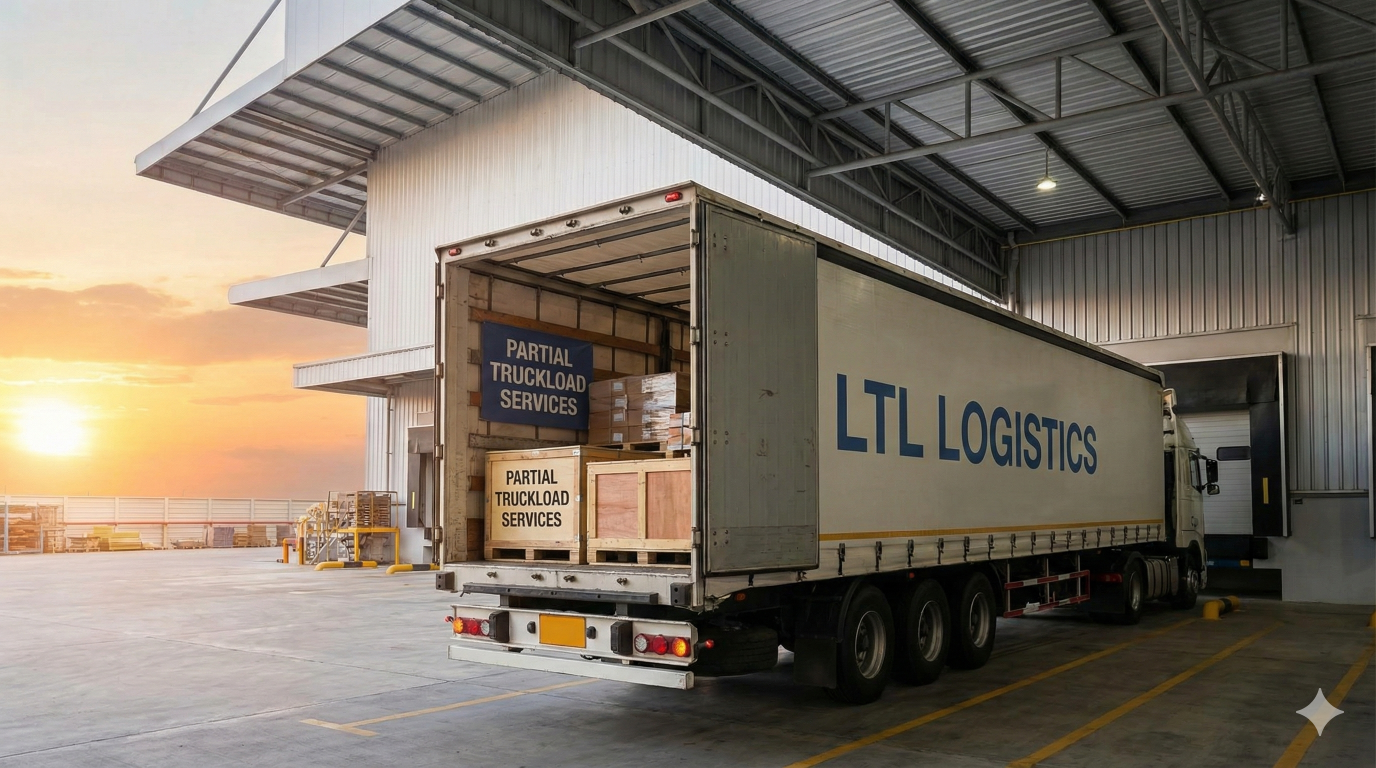
Freight That Doesn't Need a Full Truck Deserves the Right Mode
LTL (Less Than Truckload) and partial truckload shipping exist because not every load justifies a dedicated trailer. Most mid-size shippers operate in this space — moving palletized freight on regular schedules, managing cost-sensitive budgets, and requiring carriers who understand consolidation without compromising service.
LTL freight services work by sharing trailer space across multiple shippers, making them ideal for smaller, frequent shipments. Partial truckload fills the gap between LTL and full truckload — fewer handling points, faster transit, and better cost control than committing to a full truck.
At Exodus Logistix, we don't default every shipment to the same mode. We evaluate your freight, select the right approach, and coordinate with carriers who can execute it. Cost efficiency and reliability are not mutually exclusive — but they require operational discipline to deliver both.
LTL vs. Partial Truckload — Understanding the Difference
Both modes share trailer space, but they serve different freight profiles and operational needs. Choosing the wrong one adds cost — or delays.
LTL
- Smaller shipments — typically 1 to 6 pallets
- Multiple shippers share a single trailer
- Pay only for the space your freight occupies
- Flexible scheduling and routing through carrier networks
- Best for cost-sensitive, non-urgent freight
Partial
- Mid-size freight — typically 6 to 18 pallets
- Fewer co-loads than LTL — less terminal handling
- Faster transit than traditional LTL
- Lower cost than full truckload
- Best for shippers who outgrow LTL but don't need FTL
Need a full trailer? When your freight fills 18+ pallets or requires a dedicated trailer for compliance, security, or timing reasons, Full Truckload (FTL) Transportation is the right move.
When LTL or Partial Truckload Is the Right Call
These modes are built for specific freight profiles. When the match is right, the cost advantage is significant.
Palletized freight
Consolidated, palletized loads are the standard unit of LTL and partial truckload. Properly palletized freight moves more efficiently and sustains fewer handling exceptions.
Flexible delivery windows
LTL is well-suited for freight where delivery timing has some flexibility. Partial truckload narrows transit time while still sharing trailer space.
Lower-volume shipments
When freight volume doesn't justify a dedicated trailer, LTL and partial truckload provide the right balance of cost and service.
Regional or multi-stop routes
LTL networks are optimized for regional distribution and multi-stop routing, making them efficient for freight that moves through multiple points.
Cost-sensitive freight programs
For operations managing freight spend, LTL and partial truckload offer significant cost advantages over committing to dedicated truckload capacity.
Our LTL & Partial Truckload Capabilities
Nationwide LTL logistics coverage with particular depth on California and West Coast lanes — where LTL execution challenges are most common and carrier relationships matter most.
Nationwide LTL coverage — all 48 contiguous states
California & West Coast execution (Inland Empire, Central Valley, port corridors)
Midwest and East Coast lane strength
Access to national and regional LTL carrier networks
Partial truckload coordination for mid-size freight
Shipment visibility and in-transit coordination
Exception management and proactive communication
California & West Coast LTL Execution
California LTL freight is where many providers struggle — tight capacity, longer transit times, and inconsistent carrier performance. We have established carrier relationships across the Inland Empire, Central Valley, Los Angeles Basin, and major port corridors, with reliable coverage into Oregon, Washington, Nevada, and Arizona.
If West Coast LTL and partial freight shipping has been a persistent problem for your operation, let's talk.
How Our Process Works
Every LTL and partial truckload shipment follows a structured process. Exodus is hands-on — not a pass-through broker.
Freight Evaluation
We assess shipment size, weight, commodity, origin, destination, and urgency to determine whether LTL or partial truckload is the right operational fit.
Mode Selection
LTL and partial truckload serve different freight profiles. We select the mode that best balances cost, transit time, and handling requirements — not the mode that's easiest to book.
Carrier Coordination
We source from our vetted LTL and partial truckload carrier network, prioritizing carriers with documented performance on your specific lane.
In-Transit Visibility
Real-time status updates throughout the move. You'll know where your freight is before you have to ask.
Delivery Confirmation & Exception Handling
We manage delivery confirmation and resolve exceptions — delays, access issues, or carrier communication gaps — with direct response and documented resolution.
Industries We Support
Our LTL and partial truckload services serve freight operations across multiple verticals — each with distinct shipping patterns, compliance requirements, and cost targets.
Retail & eCommerce
Manufacturing
Food & Beverage
Healthcare & Medical
Reverse Logistics
Modular Home Components
Why Exodus Logistix for LTL & Partial Freight
Reliable LTL logistics providers are not interchangeable. Execution quality and carrier coordination are what separate performance from promises.
Mode optimization, not one-size-fits-all
Every shipment is evaluated on its own merits. We'll tell you when LTL is the right call — and when partial or full truckload is the better operational decision.
Cost control without compromising reliability
We don't optimize for the cheapest quote. We optimize for the right carrier, the right mode, and the right outcome — which consistently delivers the best total cost.
Real operational oversight
Our team actively manages each shipment through the carrier network. We don't post freight and wait — we stay involved from tender to delivery.
Responsive communication
You have direct access to the team managing your freight. Not a ticket queue. Not an automated status page. Real people who know your shipment.
Enterprise-ready execution
We regularly support mid-size to enterprise shippers managing recurring LTL programs, high-frequency partial truckload lanes, and complex multi-stop distribution.
LTL & Partial Truckload — Common Questions
Answers to questions we hear most from enterprise shippers evaluating LTL freight services and partial truckload options.
What is LTL shipping?
LTL (Less Than Truckload) shipping is a freight mode where your shipment occupies only a portion of a trailer, sharing space with other shippers' freight. It's cost-efficient for smaller loads — typically 1 to 6 pallets or under 10,000 lbs — where paying for a full trailer isn't justified. LTL carriers consolidate freight from multiple shippers onto a single trailer, route it through their network, and deliver each shipment to its destination.
What is partial truckload shipping?
Partial truckload (PTL) is a hybrid mode between LTL and full truckload. It's used for shipments too large for standard LTL — typically 6 to 18 pallets — but not large enough to justify a full trailer. Partial truckload moves with fewer co-loads than LTL, resulting in less terminal handling, faster transit times, and lower risk of freight damage. It offers the cost efficiency of shared space with closer to FTL-level speed and handling.
LTL vs. partial truckload vs. full truckload — which is right for my freight?
Use LTL for smaller, cost-sensitive shipments (1–6 pallets) where transit time flexibility exists. Choose partial truckload for mid-size freight (6–18 pallets) where you want fewer handling points, faster transit, and better pricing than FTL. Select full truckload when your freight fills most or all of a trailer, transit time is critical, or your cargo requires a dedicated trailer for compliance or security reasons. Exodus Logistix evaluates each shipment individually to match freight to the right mode.
Do you offer nationwide LTL coverage?
Yes. Exodus Logistix provides LTL freight services across all 48 contiguous states. We maintain carrier relationships across major regional and national LTL networks to ensure reliable coverage on both high-volume corridors and secondary markets.
Can you handle California and West Coast freight?
West Coast LTL execution is a demonstrated strength for Exodus Logistix. We move freight into and out of California — including the Inland Empire, Central Valley, and Los Angeles Basin — as well as Oregon, Washington, Nevada, and Arizona. If California LTL freight has been a recurring challenge for your operation, we can help.
Ready to Optimize Your LTL & Partial Truckload Freight?
Whether you're managing recurring palletized freight, cost-sensitive shipping programs, or mid-size loads that don't fit neatly into LTL or FTL — let's evaluate the right approach for your operation. Get a quote or connect directly with our logistics team.