
Why Shippers Struggle With Pickup Schedules | Exodus Logistix
Quick Answer
Many transportation problems are blamed on carriers.
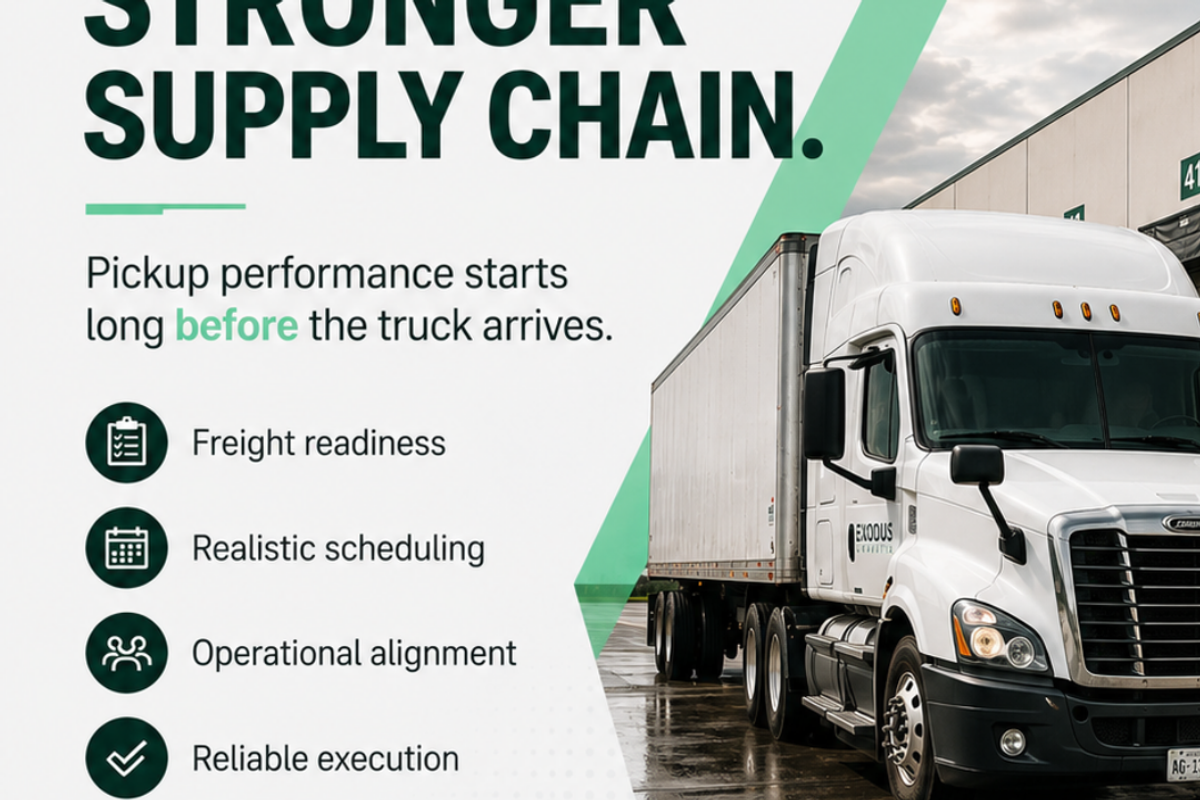
But in many cases, inconsistent pickups begin long before a truck arrives.
Freight readiness, production schedules, labor availability, dock capacity, and transportation planning all influence whether pickups occur as scheduled.
When these factors become misaligned, businesses often experience missed pickups, loading delays, detention exposure, and inconsistent freight flow.
At Exodus Logistix, transportation planning starts with understanding what happens before the pickup—not just the pickup itself.
Pickup Performance Starts Before Transportation Begins
Most shippers focus on what happens when the truck arrives.
The reality is that pickup success is often determined hours—or even days—earlier.
Questions that impact pickup performance include:
- Is the freight ready?
- Is labor available?
- Are dock appointments realistic?
- Has production stayed on schedule?
- Is equipment available?
- Have transportation requirements been communicated clearly?
When these elements are aligned, transportation becomes easier to execute.
When they are not, pickup schedules often become difficult to maintain.
Why Consistent Pickups Matter
A delayed pickup affects more than a single shipment.
It can impact:
- Delivery schedules
- Customer expectations
- Inventory flow
- Production planning
- Transportation costs
- Carrier relationships
One missed pickup may be manageable.
Repeated pickup issues often indicate a broader operational challenge.
Freight Readiness Is Often the Biggest Variable
One of the most common causes of pickup delays is freight that is not ready when transportation arrives.
This can happen when:
- Production runs behind schedule
- Orders are released late
- Inventory is unavailable
- Documentation is incomplete
- Freight is not staged for loading
Transportation providers can only move freight that is ready to move.
The more visibility transportation teams have into freight readiness, the more effectively pickups can be coordinated.
Scheduling Should Reflect Operational Reality
Many businesses schedule transportation based on ideal conditions.
Successful transportation planning is based on actual conditions.
For example:
A facility may schedule pickups every afternoon.
But if production consistently finishes later than expected, those appointments may create recurring delays.
The objective is not filling a calendar.
The objective is creating schedules that support reliable execution.
Transportation Flexibility Can Improve Pickup Performance
Some operations benefit from transportation strategies that create greater scheduling flexibility.
Depending on the operation, this may include:
- Dedicated capacity
- Drop trailer programs
- Scheduled pickup windows
- Trailer pools
- Flexible loading schedules
The right solution depends on freight volume, operational requirements, and shipping patterns.
The common goal is creating a transportation process that supports consistency.
Visibility Improves Coordination
Transportation teams perform best when they have visibility into operational changes.
Updates regarding:
- Freight readiness
- Production delays
- Inventory availability
- Schedule adjustments
- Equipment requirements
allow transportation providers to make proactive decisions before disruptions occur.
Visibility helps prevent surprises.
And surprises are often what disrupt pickup schedules.
Why Businesses Work With Exodus Logistix
At Exodus Logistix, transportation planning extends beyond securing capacity.
We evaluate:
- Freight readiness
- Facility operations
- Scheduling requirements
- Transportation modes
- Equipment availability
- Operational priorities
before developing a transportation strategy.
Because reliable pickups rarely happen by accident.
They happen through planning, communication, and execution.
Frequently Asked Questions
Why do freight pickups get delayed?
Pickup delays can result from freight readiness issues, production delays, labor shortages, scheduling conflicts, equipment constraints, or communication gaps.
Does transportation planning affect pickup performance?
Yes. Transportation planning helps align freight availability, labor resources, carrier schedules, and operational requirements.
Can drop trailer programs improve pickup consistency?
For some operations, drop trailer programs create additional flexibility by separating loading schedules from driver arrival times.
Why is freight readiness important?
Freight readiness directly impacts whether transportation can be executed according to schedule and helps reduce avoidable delays.
Final Thoughts
Consistent pickups are rarely the result of transportation alone.
They are often the result of alignment between operations, labor, production, scheduling, and transportation planning.
Businesses that focus on freight readiness and operational visibility often experience more reliable transportation performance and fewer disruptions.
At Exodus Logistix, we believe successful transportation starts before the truck arrives.
Because pickup performance is usually built long before pickup day.
Need a Drop Trailer Program?
Learn how Exodus Logistix helps manufacturers, distribution centers, and high-volume shippers improve freight flow through dedicated trailer solutions:
Tags

About the Author
exodus logistix
Exodus Logistix provides freight and logistics solutions built on disciplined planning, clear coordination, and operational accountability. With experience supporting complex shipments across multiple industries, the team focuses on reducing disruption, improving reliability, and helping businesses move freight with confidence.