
The Perfect Storm: Why Freight Rates Exploded in 2026
Quick Answer
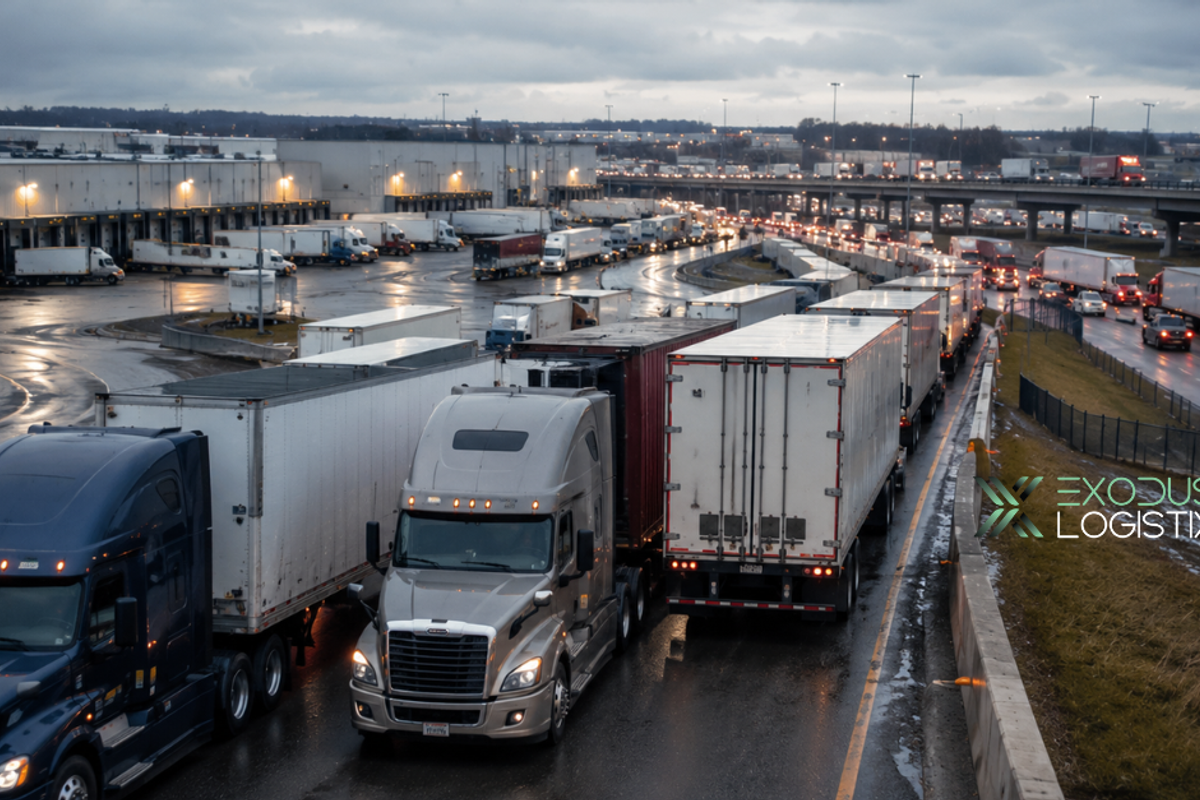
Freight rates surged in 2026 because several major disruptions hit the transportation industry at the same time. Rising diesel prices, years of carrier exits, stricter driver eligibility enforcement, and ongoing trade disruptions combined to reduce capacity and increase transportation costs across the market.
While no single event caused the spike, these factors created one of the tightest freight markets in recent years, driving rates significantly higher for shippers across the United States.
Introduction
No single event broke the freight market in 2026.
It was a collision of years of suppressed carrier capacity, sweeping regulatory changes, geopolitical conflict in the Middle East, and global trade disruption all arriving at the same moment.
If you're a shipper staring at freight quotes you haven't seen since the pandemic era, here's the full story of how we got here.
The War in Iran and the Global Diesel Shock
The trigger that turned a recovering freight market into a full-blown rate explosion was geopolitical.
In early March 2026, U.S.-Israeli military action against Iran sent oil prices sharply higher, and diesel prices rose even faster. Brent crude surged toward $120 per barrel before eventually settling around $90. The conflict brought traffic through the Strait of Hormuz to a near standstill—a critical chokepoint through which roughly one-fifth of the world's oil supply flows.
Diesel reacted more aggressively than gasoline because diesel markets are deeply connected to freight transportation, industrial activity, and global trade.
The national average diesel price climbed to $5.64 per gallon at its peak—a 41% increase since the conflict began. In California, diesel prices reached $7.32 per gallon. The Energy Information Administration's on-highway diesel benchmark, which serves as the foundation for many fuel surcharge programs, experienced one of its largest weekly increases in recent memory.
The impact on freight was immediate.
Truck freight rates reportedly increased by approximately 15% within weeks, driven primarily by fuel costs. Fuel surcharges—which typically account for about 10% of a total freight rate—increased by roughly 300% across many transportation programs.
As one energy analyst summarized:
"It propagates throughout the entire economy because we're all dependent on diesel fuel for carrying our freight and goods."
The impact extended far beyond the United States. More than 95 countries reported oil price increases following the conflict. Because diesel is more closely tied to freight and industrial activity than gasoline, it became particularly sensitive to disruptions in global shipping corridors.
Three Years of Carrier Exits Finally Caught Up
To understand why the 2026 freight market had so little capacity to absorb the demand shock, it's important to understand what happened between 2022 and 2025.
The pandemic-era freight boom attracted tens of thousands of new carriers to the market. When freight demand normalized and inventories corrected, the industry entered one of the longest freight recessions in modern history.
In 2023 alone:
- Nearly 88,000 trucking authorities were revoked
- More than 8,000 freight brokerages closed
- Yellow Corp collapsed, eliminating approximately 30,000 jobs
The challenges continued into 2024. Nearly 10,000 motor carriers exited the market during the first half of the year, while used truck inventories reached record levels as idle equipment flooded the secondary market.
By 2025, carrier failures had reached record levels.
Trucking bankruptcies rose more than 35% compared to the previous year. At one point, more than 7,300 carriers exited the market in a single month. The freight recession lasted 13 consecutive quarters, creating an unprecedented capacity reduction across the industry.
By the time freight demand began recovering, many of those carriers—and their equipment—were no longer available.
Surviving carriers, after years of operating under unsustainable conditions, finally regained pricing power.
English Proficiency Enforcement Reduced Driver Capacity
Carrier exits weren't the only factor affecting available transportation capacity.
Federal enforcement of existing English Language Proficiency (ELP) requirements also reduced the number of eligible commercial drivers.
Although ELP requirements had existed for decades under federal regulations, enforcement became significantly more aggressive beginning in 2025.
Following an Executive Order issued in April 2025, the Commercial Vehicle Safety Alliance added ELP violations to its Out-of-Service Criteria.
Under the new enforcement standard, drivers unable to demonstrate sufficient English proficiency during roadside inspections could be immediately placed out of service.
In the second half of 2025 alone, more than 12,000 out-of-service violations were issued under the revised enforcement standards.
Industry observers estimated that tens of thousands of drivers could ultimately be affected as enforcement expanded throughout 2026.
In February 2026, federal legislation made the enforcement approach permanent, further tightening available driver capacity.
The Non-Domicile CDL Crackdown
At the same time, regulators implemented significant changes to non-domiciled commercial driver's license eligibility.
Following a nationwide review of licensing compliance, the USDOT introduced stricter requirements for non-domiciled CDL holders.
Effective March 16, 2026, eligibility became limited to specific visa categories, including:
- H-2A visas
- H-2B visas
- E-2 visas
Drivers operating under other immigration classifications lost eligibility to operate commercial vehicles in the United States.
Unlike normal workforce attrition, this change occurred on a fixed regulatory deadline.
The result was an immediate reduction in available drivers across certain freight markets, particularly in regions where non-domiciled drivers represented a meaningful share of transportation capacity.
Tariffs, Trade Disruptions, and the Rising Cost of Moving Everything
The diesel shock arrived at a time when carriers were already facing rising operating costs.
The 25% Section 232 tariff on heavy-duty trucks added approximately $35,000 to the cost of a new Class 8 truck.
Total acquisition costs approached $238,000 for some equipment purchases.
Carriers that had postponed fleet replacement during the freight recession suddenly faced dramatically higher reentry costs.
As a result:
- Fleet replacement cycles slowed
- New truck orders declined
- Capacity expansion became more difficult
Cross-border transportation also experienced significant disruption.
Approximately 100,000 truck drivers were affected by changes impacting U.S.-Mexico and U.S.-Canada trade corridors.
Canada-bound truck freight reportedly declined by as much as 14.5% at its lowest point.
Meanwhile, tariffs on Chinese imports triggered waves of inventory front-loading, creating short-term surges followed by sharp volume declines.
These disruptions complicated transportation planning and contributed to rate volatility across domestic freight markets.
Everything Converged at Once
Any one of these developments would have created challenges on its own.
What made 2026 different was that every major disruption occurred simultaneously.
A market already operating with reduced carrier capacity was further constrained by regulatory changes that removed additional drivers from service.
At the same time, diesel prices surged, fuel surcharges increased dramatically, and trade disruptions created uneven freight demand across transportation networks.
Carriers that survived the freight recession finally had meaningful pricing leverage.
Shippers that secured reliable transportation partnerships during the soft market were significantly better positioned than those relying heavily on spot market sourcing.
The Q1 2026 TD Cowen/AFS Freight Index confirmed what many market participants were already experiencing.
Linehaul cost per shipment increased 10.2% quarter-over-quarter, while truckload rate indices climbed to their highest levels in several years.
What This Means for Shippers
The transportation market that existed from 2023 through much of 2025 has changed.
The abundance of available trucks, low spot market rates, and shipper leverage that characterized the freight recession have largely disappeared.
Businesses should expect:
- Higher transportation costs
- Continued fuel volatility
- Tighter capacity conditions
- Greater emphasis on carrier relationships
- Increased importance of transportation planning
For many organizations, securing dependable capacity has become more important than chasing the lowest available rate.
Final Thoughts
The freight rate explosion of 2026 was not caused by a single event.
It was the result of multiple forces colliding at the same time: geopolitical conflict, diesel price spikes, years of carrier attrition, regulatory enforcement, driver shortages, and ongoing trade disruption.
Together, these factors created one of the most challenging transportation environments in recent years.
While conditions will eventually normalize, many analysts believe the structural issues affecting capacity and transportation costs could take 12 to 24 months to unwind.
For shippers, the takeaway is clear: plan ahead, build strong carrier relationships, and prepare for elevated transportation costs well into 2027.
To learn more about transportation planning and freight solutions, visit:
Tags

About the Author
exodus logistix
Exodus Logistix provides freight and logistics solutions built on disciplined planning, clear coordination, and operational accountability. With experience supporting complex shipments across multiple industries, the team focuses on reducing disruption, improving reliability, and helping businesses move freight with confidence.