
What Is Reverse Logistics? Understanding How Product Returns Move Through the Supply Chain
Quick Answer
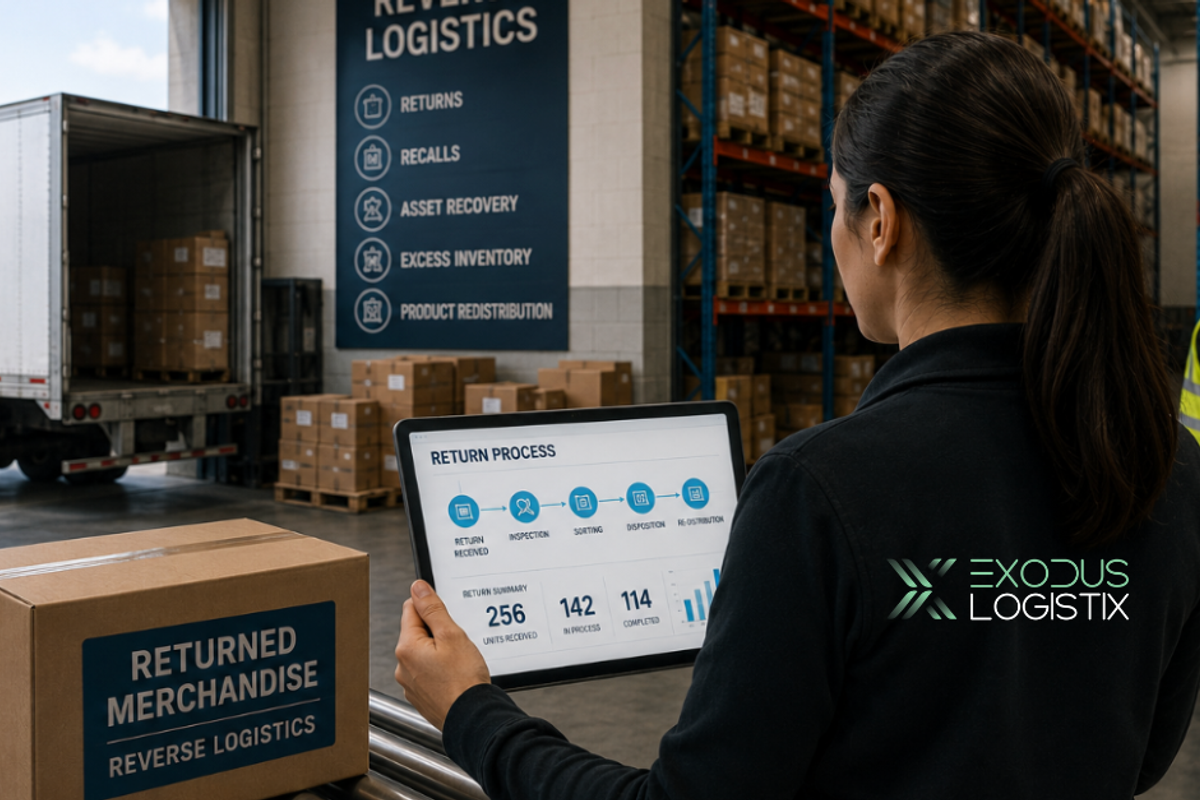
Reverse logistics is the process of moving products from their final destination back through the supply chain.
Unlike traditional freight transportation, which moves products from manufacturers to customers, reverse logistics focuses on returns, excess inventory, recalls, asset recovery, refurbishment, and product redistribution.
An effective reverse logistics strategy helps businesses improve inventory management, recover value from returned products, and maintain greater visibility throughout the return process.
Why Reverse Logistics Matters
Product movement does not always end with delivery.
Many businesses regularly manage:
- customer returns
- excess inventory
- seasonal merchandise
- product recalls
- damaged goods
- asset recovery
Managing these movements efficiently helps reduce operational complexity while supporting a more resilient supply chain.
What Is Reverse Logistics?
Reverse logistics refers to the transportation and management of products moving back through the supply chain.
Rather than shipping products to customers or distribution centers, reverse logistics coordinates the movement of goods returning from retail locations, warehouses, job sites, or end users.
The objective is to manage returned freight efficiently while maintaining visibility and control throughout the process.
Common Reverse Logistics Services
Depending on business requirements, reverse logistics may include:
Product Returns
Coordinating transportation for returned merchandise from retail stores or customers.
Excess Inventory
Moving overstock products to warehouses, redistribution centers, or liquidation facilities.
Product Recalls
Supporting the safe transportation of recalled products through organized return processes.
Asset Recovery
Transporting reusable equipment, fixtures, or valuable assets back into inventory.
Product Redistribution
Relocating returned products to facilities where they can be inspected, repackaged, refurbished, or redistributed.
How Reverse Logistics Benefits Businesses
Better Inventory Management
Efficient return processes help businesses maintain more accurate inventory visibility.
Improved Operational Efficiency
Organized transportation reduces unnecessary handling and supports smoother return operations.
Greater Shipment Visibility
Knowing where returned freight is throughout transportation helps businesses make better operational decisions.
Value Recovery
Products that can be repaired, redistributed, or returned to inventory may provide additional business value.
Why Visibility Is Important in Reverse Logistics
Returned products often require additional coordination compared to outbound shipments.
Shipment visibility helps businesses monitor:
- return progress
- transportation status
- receiving schedules
- inventory movement
- operational updates
Greater visibility supports faster decision-making throughout the reverse logistics process.
Common Questions About Reverse Logistics
What is reverse logistics?
Reverse logistics is the transportation and management of products moving back through the supply chain after delivery.
Is reverse logistics only for retail businesses?
No.
Manufacturers, distributors, healthcare organizations, and many other industries use reverse logistics to manage returned products and inventory.
What products are commonly moved through reverse logistics?
Returns, excess inventory, recalled products, reusable assets, and merchandise for redistribution are common examples.
Why is shipment visibility important for reverse logistics?
Visibility helps businesses monitor returned freight while improving inventory planning and operational coordination.
Can reverse logistics help reduce waste?
Organized return processes may support refurbishment, redistribution, and asset recovery rather than unnecessary disposal.
Building a Smarter Reverse Logistics Strategy
Managing returned products requires the same level of planning, communication, and coordination as outbound transportation.
Businesses that invest in organized reverse logistics processes are often better positioned to improve inventory visibility, recover value from returned products, and strengthen supply chain performance.
Final Thoughts
Reverse logistics is an essential part of modern supply chain management.
From product returns and excess inventory to recalls and asset recovery, businesses benefit from transportation solutions that provide visibility, coordination, and efficient execution throughout the return process.
For organizations looking to improve operational efficiency, reverse logistics is more than handling returns—it is an opportunity to create greater value across the supply chain.
To learn more about transportation solutions designed around visibility, planning, and execution, visit:
Tags

About the Author
exodus logistix
Exodus Logistix provides freight and logistics solutions built on disciplined planning, clear coordination, and operational accountability. With experience supporting complex shipments across multiple industries, the team focuses on reducing disruption, improving reliability, and helping businesses move freight with confidence.