
Spot Freight vs. Contract Freight: Which Is Right for Your Shipments?
Quick Answer
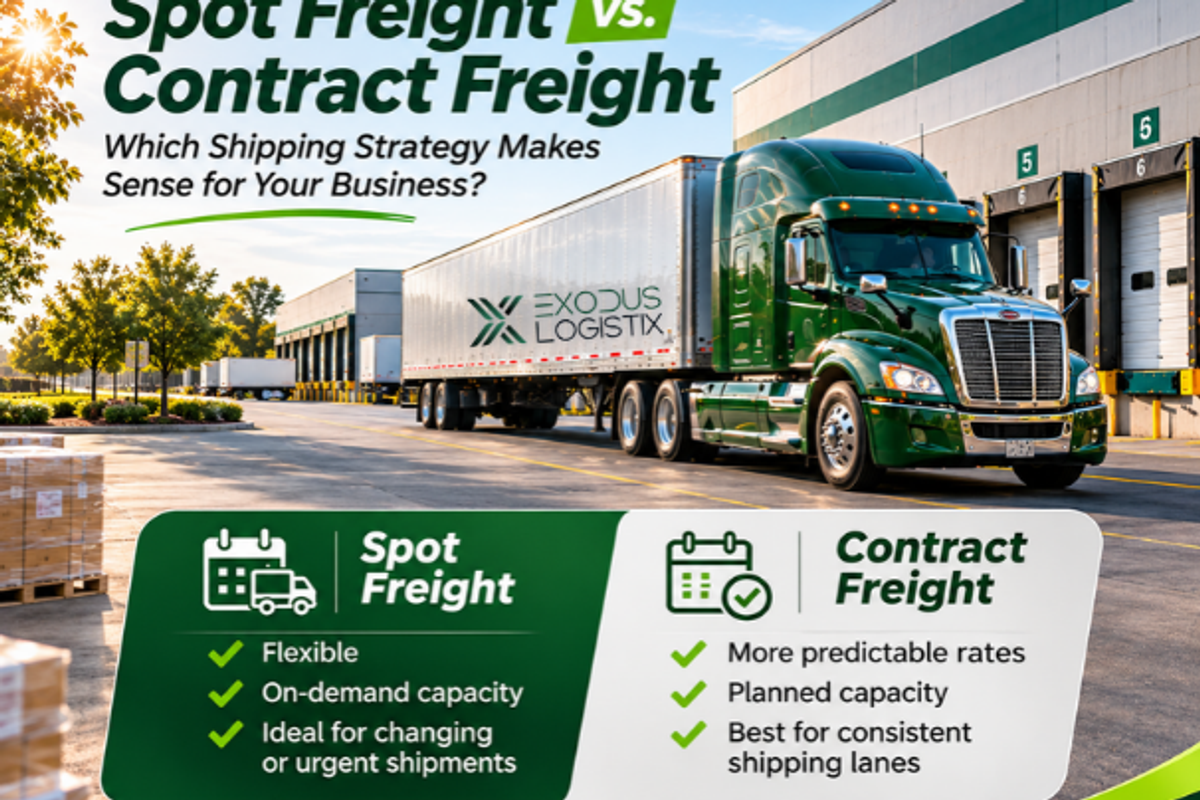
Spot freight and contract freight serve different transportation needs.
Spot freight is arranged for an individual shipment at the current market rate. It gives shippers flexibility when they have unexpected loads, changing volume, or transportation needs outside their regular shipping schedule.
Contract freight involves agreed transportation rates and service terms for a defined period or recurring shipping requirements. It can help businesses establish more predictable transportation costs and capacity planning on consistent lanes.
For many businesses, the best approach is not choosing one over the other. It is knowing when to use each based on freight volume, lane consistency, market conditions, and delivery requirements.
What Is Spot Freight?
Spot freight refers to transportation arranged for an individual shipment based on current market conditions.
Unlike recurring contract arrangements, spot shipments are typically priced and covered load by load. Rates can change depending on available trucks, equipment requirements, pickup and delivery locations, timing, and overall market demand.
For shippers, spot freight provides flexibility when transportation needs are difficult to predict.
When Does Spot Freight Make Sense?
Spot freight can be useful when:
- Shipment volume changes unexpectedly. Production increases, customer orders, or inventory transfers create additional loads.
- A regular carrier cannot cover a shipment. A backup transportation option is needed to keep freight moving.
- Shipping lanes are inconsistent. Loads move between different origins and destinations without a predictable schedule.
- Seasonal demand increases. Temporary volume spikes require additional transportation capacity.
- An urgent shipment needs coverage. A business needs to arrange transportation outside its usual shipping plan.
The advantage is flexibility. Shippers can source capacity when a shipment arises without committing every load to a long-term arrangement.
However, spot rates can fluctuate. When capacity becomes tight or demand increases, securing a truck may cost more than expected.
What Is Contract Freight?
Contract freight involves an agreed transportation arrangement between a shipper and a carrier or transportation provider.
Rates, service expectations, lanes, and other operating terms are established for a defined period or shipping program.
This approach is often used by businesses with consistent freight volume and predictable transportation requirements.
When Does Contract Freight Make Sense?
Contract freight may be a better fit when:
- Shipping volume is consistent. The business moves freight regularly throughout the week or month.
- Lanes are predictable. Shipments frequently travel between the same facilities or distribution points.
- Transportation costs need greater predictability. Agreed pricing helps support budgeting and procurement planning.
- Capacity planning is important. The business needs to coordinate transportation around production and distribution schedules.
- Service consistency matters. Recurring operations benefit from established expectations and carrier relationships.
Contract arrangements can provide greater structure, but they also require accurate volume forecasts and regular performance reviews.
A lane that changes significantly in volume, timing, or destination may need to be reevaluated.
Spot Freight vs. Contract Freight: Key Differences
Both approaches help businesses secure transportation, but they serve different operational requirements.
Consideration
Spot Freight
Contract Freight
Pricing
Based on current market conditions
Agreed pricing for defined terms
Booking
Typically arranged load by load
Planned around recurring requirements
Flexibility
Higher for changing shipment needs
More structured
Capacity planning
Based on immediate availability
Based on anticipated volume and lanes
Best suited for
Irregular or unpredictable shipments
Consistent shipping patterns
Cost predictability
Can fluctuate
Generally more predictable within agreed terms
Long-term commitment
Usually limited to individual shipments
Typically involves defined commitments or terms
The right choice depends on how a company's freight actually moves, not simply which rate looks lower at the time of booking.
What Factors Should Shippers Consider?
Choosing between spot and contract freight requires looking beyond the quoted transportation rate.
Several operational factors should influence the decision.
1. Shipment Volume and Frequency
Start by reviewing how frequently freight moves.
Businesses shipping several loads each week on established lanes may benefit from contract arrangements.
Companies with irregular orders, changing production schedules, or occasional shipments may need the flexibility of spot freight.
Review historical shipment data before deciding. Monthly load counts, seasonal patterns, and average shipment frequency can help identify which lanes are suitable for recurring agreements.
2. Lane Consistency
A lane with predictable origin, destination, volume, and pickup requirements is easier to plan around.
For example, a manufacturer shipping finished goods from its California facility to the same distribution center several times a week may benefit from a structured transportation arrangement.
A shipment moving to a different destination every week may be better suited to spot coverage.
Lane consistency also helps transportation providers evaluate available capacity and develop more informed pricing.
3. Market Conditions
Freight markets change.
Seasonal demand, port activity, weather, fuel costs, equipment availability, and regional shipping patterns can all influence transportation rates and capacity.
A contract rate may provide greater stability during its agreed term, while spot pricing responds more directly to current market conditions.
Shippers should review their most important lanes regularly rather than assuming that a previous rate or capacity arrangement will remain suitable indefinitely.
4. Delivery Requirements
Not every shipment has the same service expectations.
Some freight can move within a flexible delivery window. Other shipments are tied to production schedules, retail appointments, customer commitments, or temperature-sensitive handling requirements.
Before selecting a transportation strategy, consider:
- Required pickup and delivery dates
- Equipment availability
- Transit expectations
- Appointment requirements
- Special handling instructions
- Potential costs of missed delivery windows
The transportation rate matters, but it should not be evaluated separately from the service required.
5. Cost Beyond the Freight Rate
A lower quoted rate does not automatically mean lower transportation costs.
Shippers should also consider detention, missed appointments, additional handling, rescheduling, service failures, and the administrative time required to manage shipments.
A transportation strategy should be evaluated based on its overall impact on operations, not just the initial quote.
Why Many Shippers Use a Combination of Both
For businesses with changing freight requirements, relying entirely on spot or contract freight may limit flexibility.
A hybrid strategy can provide a more practical balance.
For example, a distributor may establish contract arrangements for its regular weekly shipments while using spot freight to cover unexpected orders or temporary volume increases.
A manufacturer may use planned capacity for its primary shipping lanes but source additional trucks during production peaks.
This approach allows businesses to maintain structure where freight is predictable while retaining flexibility when requirements change.
Example: A California Manufacturer
Consider a manufacturer shipping products from Northern California to distribution centers across the West Coast.
Its primary lanes move consistently every week, making them suitable for planned transportation arrangements.
However, a new customer order creates additional shipments to destinations outside its regular network.
Instead of changing the entire transportation program, the manufacturer can maintain its established arrangements for recurring lanes and use spot freight to cover the additional loads.
The result is a transportation strategy that accounts for both predictable volume and changing demand.
The important part is having a clear view of which shipments belong in each category.
How a Freight Brokerage Partner Helps Manage Both
Managing spot and contract freight requires more than comparing rates.
Shippers need access to qualified carrier capacity, accurate shipment information, clear communication, and coordination throughout execution.
A freight brokerage partner can help evaluate transportation requirements and identify an appropriate solution for each shipment or lane.
This may include:
- Sourcing available capacity for individual spot shipments
- Reviewing recurring lanes for structured transportation arrangements
- Comparing available equipment and transportation modes
- Coordinating pickup and delivery appointments
- Monitoring shipment progress and communicating updates
- Addressing capacity changes and shipment disruptions
- Reviewing shipment history to support future planning
At Exodus Logistix, freight brokerage supports spot shipments, recurring lanes, seasonal capacity, managed transportation, and project freight.
Our team evaluates the shipment profile, equipment requirements, timing, and service expectations before coordinating transportation.
With regional and long-haul coverage across the United States and approved cross-border support between the U.S. and Canada, Exodus helps shippers manage changing freight requirements through one coordinated logistics relationship.
Learn more about our Freight Brokerage Services.
How to Determine the Right Freight Strategy
Before deciding between spot and contract freight, review your transportation activity using a few practical questions:
- Which shipping lanes move consistently every week?
- How often does shipment volume change?
- Which lanes experience frequent capacity shortages?
- Are current transportation rates aligned with actual market conditions?
- Which shipments require dedicated planning or specialized equipment?
- How much additional capacity is needed during seasonal peaks?
- Are carrier performance and delivery requirements being reviewed regularly?
These questions help identify where a structured agreement may make sense and where flexible spot coverage remains useful.
The goal is not to move every shipment under one pricing model. It is to build a transportation strategy that supports the way the business operates.
Final Thoughts: Build a Freight Strategy Around Your Actual Shipping Needs
Spot freight and contract freight are not competing solutions. They are different tools for managing transportation.
Contract freight can support predictable lanes and recurring volume. Spot freight provides flexibility when shipment requirements change or additional capacity is needed.
For many shippers, combining both creates a more adaptable transportation program.
The key is understanding your freight patterns, monitoring market conditions, and working with a logistics partner who can coordinate capacity and execution as your needs evolve.
At Exodus Logistix, we help businesses evaluate transportation requirements and coordinate freight solutions built around their shipping operations.
Need help evaluating your freight strategy?
Connect with Exodus Logistix to discuss your lanes, capacity requirements, and transportation needs.
Tags

About the Author
exodus logistix
Exodus Logistix provides freight and logistics solutions built on disciplined planning, clear coordination, and operational accountability. With experience supporting complex shipments across multiple industries, the team focuses on reducing disruption, improving reliability, and helping businesses move freight with confidence.