
How to Choose Between Partial Truckload and Full Truckload Shipping | Exodus Logistix
Quick Answer
Choosing between Partial Truckload (PTL) and Full Truckload (FTL) isn't simply about the size of the shipment.
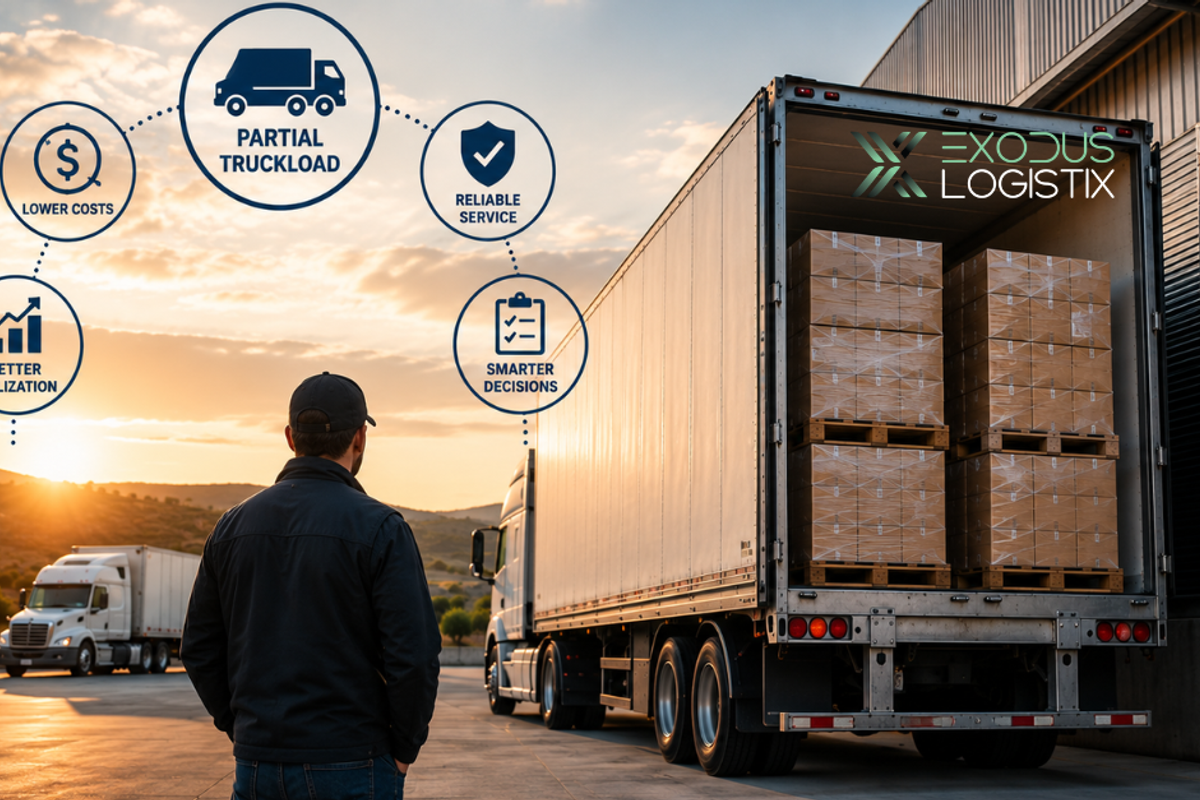
If your freight is too large for traditional LTL but doesn't require an entire trailer, Partial Truckload may be a more efficient transportation strategy. Instead of paying for unused trailer space, businesses can share available capacity with compatible freight while maintaining reliable service and reducing unnecessary transportation costs.
At Exodus Logistix, the goal isn't to recommend one transportation mode over another. It's to determine which solution best fits the shipment, the lane, and the operation.
Paying for an Entire Trailer Doesn't Always Create More Value
Many businesses automatically move to Full Truckload once a shipment outgrows traditional LTL.
It's a logical decision.
But it isn't always the most efficient one.
If a shipment only occupies part of a trailer, paying for dedicated capacity may increase transportation costs without improving service or transit performance.
Unused trailer space is one of the easiest transportation costs to overlook because the shipment still arrives on time.
The real question isn't whether the freight can move on a dedicated truck.
It's whether paying for the entire trailer is the best use of your transportation budget.
Partial Truckload Fills the Gap Between LTL and Full Truckload
Transportation isn't limited to two choices.
Between traditional LTL and dedicated Full Truckload is another option that many businesses overlook.
Partial Truckload is designed for shipments that:
- Exceed typical LTL quantities
- Don't require an entire 53-foot trailer
- Move on established regional or long-haul lanes
- Can benefit from shared trailer capacity while minimizing unnecessary handling
For manufacturers, distributors, and food producers, this often creates an opportunity to improve transportation efficiency without changing delivery expectations.
Shipment Size Alone Shouldn't Determine the Transportation Mode
Transportation decisions are sometimes driven by habit instead of planning.
The shipment reaches a certain size.
A Full Truckload is booked.
The freight moves.
But shipment size is only one piece of the transportation decision.
A more complete evaluation should also consider:
- Available trailer capacity
- Shipping frequency
- Delivery commitments
- Lane density
- Freight characteristics
- Transit expectations
- Warehouse operations
- Production schedules
Looking at the shipment from an operational perspective often reveals transportation opportunities that aren't obvious when every load follows the same process.
The best transportation decision is rarely based on shipment size alone.
It's based on how the freight moves through the entire operation.
Why Lane Density Matters
One of the biggest advantages of Partial Truckload isn't simply sharing trailer space.
It's having access to enough compatible freight moving on the same transportation corridors to make PTL practical.
Because Exodus Logistix regularly coordinates freight across established shipping lanes, compatible shipments can often be consolidated without increasing unnecessary handling or significantly affecting transit times.
That network density helps maximize trailer utilization while maintaining dependable transportation performance.
Without sufficient freight moving on the same lanes, Partial Truckload opportunities become much more limited.
That's why lane density isn't simply a transportation advantage.
It's a competitive advantage that helps create more efficient transportation solutions.
Lower Transportation Costs Without Sacrificing Service
Reducing freight costs shouldn't come at the expense of reliability.
The strongest transportation strategies balance:
- Cost
- Transit time
- Capacity
- Freight handling
- Delivery performance
When Partial Truckload is the right operational fit, businesses can lower transportation costs while maintaining the service their customers expect.
The objective isn't simply to reduce freight spend.
It's to eliminate unnecessary transportation costs while maintaining dependable execution.
Better Planning Leads to Better Transportation Decisions
The decision between Partial Truckload and Full Truckload shouldn't happen after freight is staged for pickup.
It should happen during transportation planning.
Evaluating shipment size, freight characteristics, lane density, transit expectations, and operational requirements before booking equipment gives businesses more flexibility and often uncovers opportunities to improve transportation efficiency.
Sometimes the biggest transportation savings don't come from negotiating a lower freight rate.
They come from selecting the transportation strategy that's the better fit for the shipment.
Why Businesses Work With Exodus Logistix
At Exodus Logistix, transportation planning begins with understanding how freight moves through your operation.
We evaluate shipment size, shipping patterns, lane density, transit requirements, production schedules, and operational priorities before recommending the transportation strategy that delivers the greatest value.
Our transportation solutions include:
- Full Truckload
- Partial Truckload
- Shared Truckload
- Intermodal
- LTL
- Drop Trailer Programs
Every recommendation is based on operational fit—not simply transportation mode.
Because the best transportation strategy is the one that supports the way your freight actually moves.
Frequently Asked Questions
When should businesses use Partial Truckload?
Partial Truckload is often the right choice for shipments that are too large for traditional LTL but don't require an entire trailer. The best option depends on shipment size, lane characteristics, delivery requirements, and transportation goals.
Is Partial Truckload less expensive than Full Truckload?
It can be. When businesses are paying for trailer space they don't fully use, Partial Truckload may reduce transportation costs by allowing compatible freight to share available trailer capacity.
Does Partial Truckload involve more freight handling?
Not necessarily. Depending on the transportation network and shipping lane, Partial Truckload may involve less handling than traditional LTL while still providing the cost advantages of shared trailer capacity.
How do I know which transportation mode is right for my shipment?
The best transportation solution depends on several factors, including shipment size, freight characteristics, delivery schedules, available capacity, lane density, and transit expectations. Evaluating those factors together leads to more informed transportation decisions.
Final Thoughts
Not every shipment requires a dedicated trailer.
And not every shipment belongs in an LTL network.
For freight that falls between those two options, Partial Truckload can provide a smarter balance of cost, capacity, and service.
At Exodus Logistix, we help businesses evaluate transportation strategies based on how their freight actually moves—not simply the transportation mode they've always used.
The question isn't whether your freight can move on a dedicated truck.
It's whether you're paying for trailer capacity your shipment doesn't actually need.
Because improving transportation performance isn't always about finding another truck.
It's about choosing the right transportation strategy before freight ever leaves the dock.
Tags

About the Author
exodus logistix
Exodus Logistix provides freight and logistics solutions built on disciplined planning, clear coordination, and operational accountability. With experience supporting complex shipments across multiple industries, the team focuses on reducing disruption, improving reliability, and helping businesses move freight with confidence.