
Modular Home Transportation Planning: 7 Things to Confirm
Quick Answer
Before shipping a modular home, builders should confirm seven critical details: module dimensions and weight, equipment requirements, route feasibility, permits and escorts, delivery scheduling, site access, and communication between project stakeholders.
These factors influence how safely and efficiently a structure can move from the manufacturing facility to the installation site.
The most important consideration is alignment: transportation must be planned around the construction schedule, site conditions, and installation requirements—not treated as a standalone delivery.
Why Modular Home Transportation Requires More Than a Truck
Modular construction moves much of the building process into a controlled manufacturing environment. But once the completed sections leave the factory, transportation becomes a critical link between manufacturing and installation.
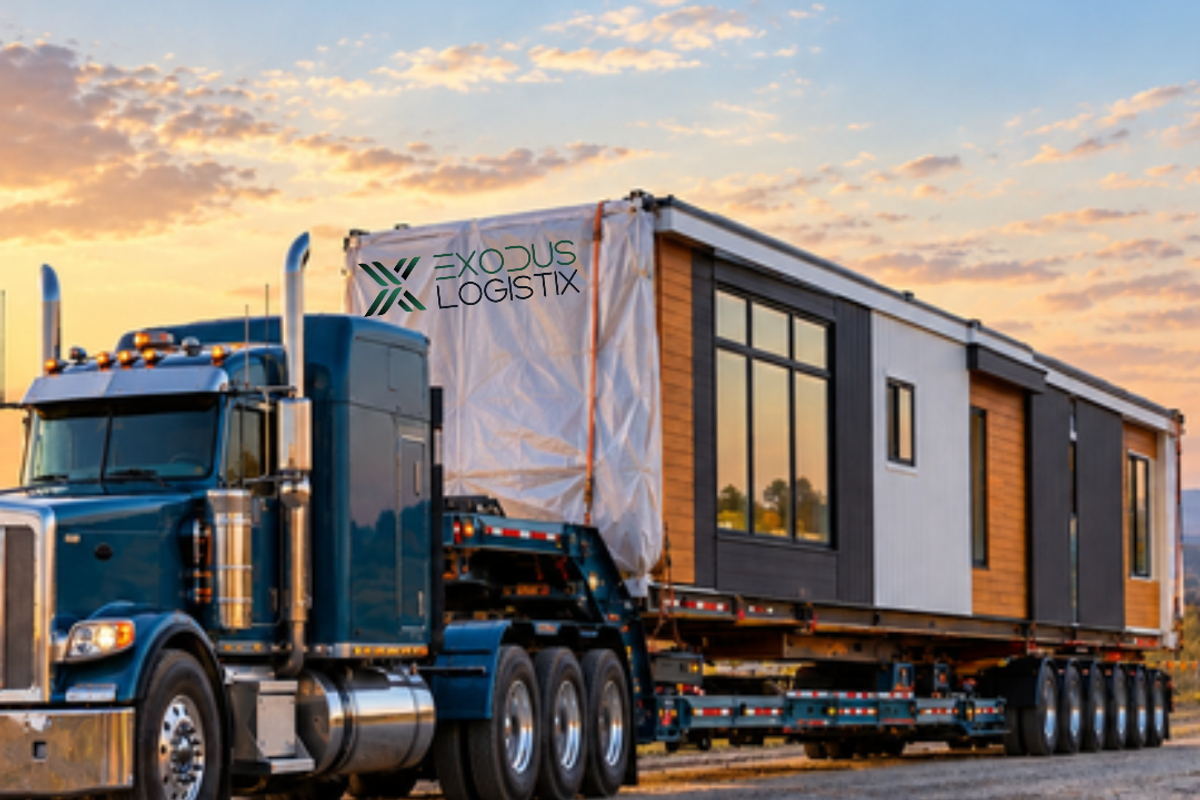
Unlike standard freight, modular homes and prefabricated structures may exceed legal vehicle dimensions or weight limits. Depending on the load and route, transportation can require specialized trailers, oversize permits, escort vehicles, detailed route surveys, and coordination with the receiving site.
Several parties may need to work together, including:
- Modular home manufacturers
- Builders and general contractors
- Transportation providers and specialized carriers
- Permitting authorities and escort operators
- Crane providers and installation crews
- Site managers and receiving teams
When these parties operate on different schedules or work from incomplete information, a transportation issue can become a construction problem.
The solution starts with confirming the requirements before dispatch.
7 Things to Confirm Before Shipping a Modular Home
1. Verify the Module Dimensions, Weight, and Configuration
Every transportation plan starts with accurate shipment specifications.
The dimensions and weight of each module influence equipment selection, permit requirements, route feasibility, and handling arrangements. For multi-section homes, each movement may require its own transportation plan and delivery sequence.
Before requesting capacity, confirm:
- Overall dimensions and transport weight of each section
- Number of modules and planned shipment sequence
- Loading, securement, and handling requirements
- Pickup location and manufacturer release date
- Any restrictions affecting loading or unloading
Do not rely on preliminary measurements when final specifications are available. Changes to dimensions or configuration can affect a route or permit plan that has already been prepared.
Operational takeaway: Finalize the shipment details before committing to equipment and delivery arrangements.
2. Assess Route Feasibility Before Confirming the Schedule
The shortest route is not always the most suitable route for an oversized load.
Low bridges, narrow roads, tight turns, weight-restricted infrastructure, construction zones, and overhead utilities can all affect route selection. A road that accommodates a standard tractor-trailer may not be suitable for a wide or tall modular structure.
A route assessment should consider the actual shipment dimensions, applicable restrictions, and the planned transportation equipment. More complex movements may require a detailed route survey to identify obstacles before the shipment is dispatched.
Route feasibility also affects scheduling. An approved alternative route may increase travel distance or require additional coordination.
What builders should confirm:
- The proposed route accommodates the load and equipment
- Relevant bridge, road, and clearance restrictions have been evaluated
- Necessary route surveys have been completed
- Potential detours and restrictions are addressed in the schedule
Early route planning gives project teams more time to resolve issues before the structure is on the road.
3. Confirm Permits and Escort Requirements
Oversize and overweight transportation requirements vary by jurisdiction. Interstate shipments may require separate permits for each state along the route, with specific conditions governing travel, routing, and escorts.
Pilot cars or other escort arrangements may be required depending on the load dimensions and applicable regulations. Requirements should be verified for the actual shipment rather than assumed from a previous delivery.
Before dispatch, confirm:
- Applicable oversize and overweight permits
- Approved routes and permit conditions
- Required pilot cars or escort vehicles
- Applicable travel restrictions and scheduling conditions
- Consistency between the approved plan and the actual load
Permit coordination should happen early enough to accommodate required approvals and any route adjustments.
At Exodus Logistix, permitting, route planning, and escort coordination are part of the specialized logistics process used to support modular home transportation.
4. Match the Trailer and Transportation Equipment to the Load
Equipment selection should be based on the structure's dimensions, weight, configuration, and route requirements.
Depending on the movement, suitable options may include step-deck trailers, double-drop trailers, stretch removable gooseneck trailers, or specialized toter equipment for manufactured homes. Not every option is appropriate for every structure.
The plan must also account for loading and unloading, securement, access conditions, and any handling requirements associated with the shipment.
Before confirming equipment, establish:
- The equipment type required for the specific load
- Compatibility with the approved route and permit conditions
- Loading and unloading arrangements
- Any special handling or placement requirements
Selecting equipment solely because it is available can create problems later if it does not match the shipment specifications.
The objective is to secure appropriate capacity that supports the full movement—not just the pickup.
5. Align Delivery Timing With Construction Milestones
A modular home can arrive on time from a transportation perspective and still disrupt the project if the site is not ready.
For example, a delivery scheduled before foundation work is complete may create staging problems. A late arrival may leave a crane, installation crew, or other contractors waiting.
Transportation timing should therefore be coordinated with the project's actual readiness.
Before confirming the delivery window, align the plan with:
- Foundation completion and site preparation
- Crane availability and placement arrangements, where applicable
- Installation crew schedules
- Required delivery appointments
- The sequence of multiple module deliveries
Permit timelines, route restrictions, transit expectations, and equipment availability should also inform the schedule.
Build the plan around the required delivery milestone, with realistic allowances for the approvals and coordination involved. Avoid treating an estimated transit time as a guaranteed arrival time.
6. Verify Job-Site Access and Placement Readiness
The destination must be ready to receive the structure—not merely listed as the delivery address.
Access roads may be too narrow, turning areas may be restricted, or the site may lack sufficient space for the truck and trailer to maneuver. Ground conditions, overhead obstructions, and staging limitations can also affect the final approach.
If crane-assisted placement is required, the crane provider, site manager, and transportation team must coordinate the delivery window and positioning requirements.
Confirm the following before dispatch:
- Road access and turning space for the planned equipment
- Site conditions and available staging areas
- Overhead clearance and other relevant obstructions
- Unloading or crane-placement arrangements
- On-site contact details and delivery instructions
Where site conditions are uncertain, an early assessment can help identify access problems before they become delivery-day disruptions.
The key principle: A feasible route to the property does not automatically mean the truck can safely access the final placement area.
7. Establish Clear Communication and Contingency Procedures
Modular home transportation involves multiple stakeholders and several interdependent milestones. Without clear communication, a change in one part of the plan may go unnoticed by the people responsible for the next step.
A practical communication process should establish who owns each milestone, how updates will be shared, and who makes decisions when circumstances change.
Before pickup, agree on:
- Primary contacts for the manufacturer, transportation provider, and receiving site
- Pickup, transit, and delivery milestones
- Shipment status-update expectations
- Procedures for reporting delays or route changes
- Contingency arrangements for weather, permit issues, or site-access problems
No transportation plan can eliminate every disruption. Clear ownership and timely updates can, however, help teams respond before a problem affects other project activities.
What Affects Modular Home Transportation Costs?
Modular home shipping costs depend on the shipment, the route, the required equipment, and the level of coordination involved.
Cost factor
Potential impact
Dimensions and weight
Influence equipment selection, permits, and handling requirements
Distance and route complexity
Affect transportation requirements and route planning
Permits and escorts
Add jurisdiction-specific requirements and coordination
Route surveys
Help identify restrictions and potential obstacles
Site access
May require additional planning or specialized arrangements
Delivery schedule
Tight or inflexible windows can constrain available options
Number and sequence of modules
May require multiple coordinated movements
The lowest initial quote is not necessarily the best overall option.
A useful comparison considers whether the proposed transportation plan accounts for the load, regulatory requirements, equipment, route, delivery window, and site conditions. An incomplete plan may leave important requirements unresolved until later in the project.
When evaluating providers, builders should compare the scope of the proposed solution—not price alone.
Modular Home Transportation Checklist
Use this checklist before authorizing a shipment.
Final module dimensions, weight, and configuration confirmed
Appropriate equipment identified
Route feasibility and clearance restrictions reviewed
Required permits and escorts confirmed
Delivery window aligned with construction milestones
Site access, staging, and placement arrangements verified
Stakeholder contacts and status updates established
Contingency procedures agreed upon
Completing these checks helps establish a clear transportation plan before the shipment leaves the factory.
How Exodus Logistix Supports Modular Home Transportation
Modular home transportation requires coordination across specialized equipment, routing, permitting, delivery scheduling, and final-site logistics.
Exodus Logistix provides transportation solutions for modular homes, manufactured homes, prefabricated buildings, temporary housing units, and other modular structures.
Its modular home transportation services include route planning, permit coordination, escort arrangements, specialized equipment selection, delivery scheduling, and site coordination. A network of vetted carriers supports transportation requirements across the United States.
For builders, developers, and manufacturers, the objective is to coordinate the movement from factory to foundation around the actual requirements of the project.
That means considering the shipment specifications, route restrictions, delivery milestones, and receiving-site conditions as connected parts of one transportation plan.
Learn more about Exodus Logistix modular home transportation services.
Frequently Asked Questions
How far in advance should modular home transportation be arranged?
Begin planning as early as practical, before the delivery date becomes fixed. The necessary lead time depends on shipment dimensions, route complexity, permit approvals, equipment availability, and site readiness. More complex movements generally require more coordination.
Do modular homes always require escort vehicles?
No. Escort requirements depend on the shipment's dimensions, route, and applicable regulations. Requirements should be confirmed for the specific movement and every relevant jurisdiction.
What equipment is used to transport modular homes?
Equipment varies according to the structure and transport configuration. Options may include step-deck trailers, double-drop trailers, stretch RGNs, and specialized toter equipment for manufactured homes. The appropriate choice depends on the load and route requirements.
What can delay a modular home delivery?
Common risks include permit or routing issues, unsuitable equipment, weather, road restrictions, incomplete site preparation, and scheduling conflicts involving cranes or installation crews. Early coordination helps identify many of these issues before dispatch.
Can modular homes be transported across state lines?
Yes. Interstate movements require coordination of applicable permits, routes, and escort requirements for each jurisdiction along the planned route.
Does modular home transportation include site coordination?
It can. Depending on the service scope, planning may include delivery appointments, site-access checks, crane coordination, and communication with on-site project managers. These requirements should be agreed upon before the shipment is scheduled.
Plan Your Next Modular Home Shipment
A successful modular home delivery starts well before the truck leaves the manufacturing facility.
The shipment specifications must be accurate. The route and permits must be addressed. The equipment must suit the load. And the receiving site must be ready when the structure arrives.
When those requirements are coordinated around the construction schedule, builders have a clearer plan for managing the movement and reducing avoidable disruptions.
At Exodus Logistix, we coordinate the transportation details behind complex modular home deliveries—from route planning and permitting to equipment selection and site coordination.
Planning an upcoming modular housing project? Contact Exodus Logistix to discuss your shipment requirements.
Tags

About the Author
exodus logistix
Exodus Logistix provides freight and logistics solutions built on disciplined planning, clear coordination, and operational accountability. With experience supporting complex shipments across multiple industries, the team focuses on reducing disruption, improving reliability, and helping businesses move freight with confidence.