
Logistics Execution Is Decided Upstream: Why Every Step Before Movement Matters
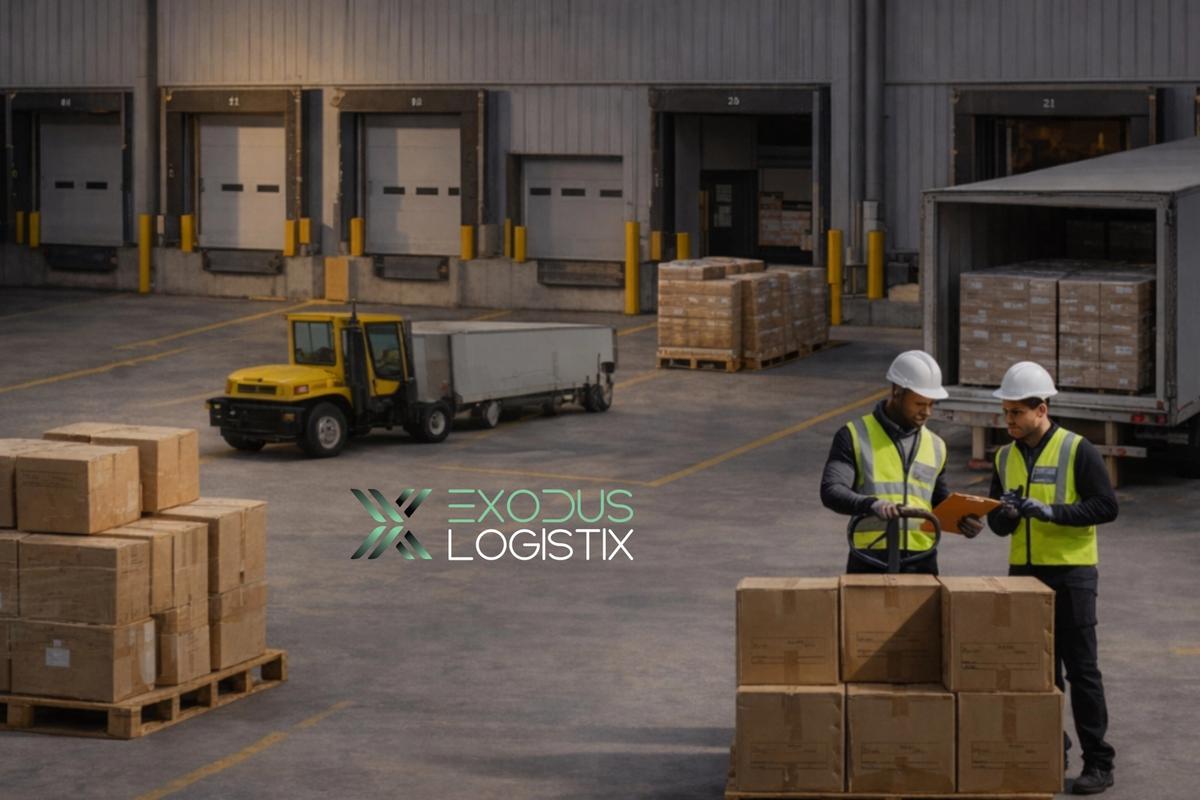
Execution doesn’t happen in one step. It’s built across many.
But more importantly — it’s decided before movement begins.
Every shipment follows a sequence. Planning, scheduling, coordination, and execution.
And within that sequence, each step sets the conditions for the next.
When those steps are aligned early, execution stays consistent. When they are not, issues follow — regardless of what happens in transit.
Why Execution Is Determined Before Movement
In logistics, performance is often evaluated at the point of delivery.
But by then, most outcomes have already been decided.
Upstream decisions — made before a shipment moves — define:
- how efficiently freight is routed
- whether schedules align with capacity
- how smoothly loading and handoffs occur
- how predictable delivery timelines will be
Execution is not created during movement. It is enabled by preparation.
The Sequence Behind Every Shipment
Every shipment moves through a structured sequence.
This includes:
- shipment planning and load structuring
- routing and scheduling alignment
- dock coordination and timing
- transportation execution
- final delivery
Each stage depends on the accuracy and alignment of the previous one.
If a step is misaligned early, the impact carries forward.
Where Execution Breaks Down
Breakdowns rarely happen in isolation.
They occur when connections between steps are weak or inconsistent.
Common issues include:
- misaligned pickup and delivery windows
- incomplete coordination between warehouse and transportation
- gaps between planning and real-world conditions
- lack of visibility across the sequence
- reactive adjustments instead of structured planning
These issues don’t start at the point of failure. They start earlier — where alignment was missed.
The Importance of Sequence Integrity
Sequence integrity means that every step in the logistics process supports the next.
It ensures that:
- planning reflects execution realities
- schedules match operational capacity
- handoffs occur without disruption
- movement follows a structured path
When sequence integrity is maintained, execution becomes consistent — not dependent on last-minute fixes.
Why Fixing Issues Mid-Process Isn’t Enough
Many logistics operations rely on reacting to issues as they arise.
But once a shipment is in motion, options become limited.
Adjustments can help — but they cannot fully correct upstream misalignment.
For example:
- rerouting cannot fix poor initial scheduling
- faster loading cannot recover lost dock time
- communication cannot replace missing coordination
True performance comes from preventing issues, not correcting them.
Connecting Every Step in the Process
Strong logistics execution is built by connecting every stage of movement.
This includes:
Aligned Planning
Decisions are made with execution in mind.
Coordinated Scheduling
Routing, dock timing, and transportation are structured together.
Structured Handoffs
Each transition between teams and processes is clear and controlled.
Continuous Visibility
Information flows across every step without delay.
This creates a connected system, rather than a series of independent actions.
Benefits of Upstream Alignment
When logistics operations are structured from the beginning, businesses gain:
Consistent Performance
Fewer disruptions across shipments.
Predictable Execution
Timelines are maintained without reactive changes.
Reduced Operational Friction
Less need for last-minute adjustments.
Improved Coordination
Teams operate with shared clarity.
Stronger Control Across the Supply Chain
Operations remain stable even as conditions change.
Supporting Complex, Multi-Step Operations
As supply chains scale, the number of steps increases.
More facilities. More carriers. More coordination points.
Without structured alignment, complexity leads to inconsistency.
With sequence integrity, complexity becomes manageable.
Building Execution From the Start
Execution is not something that happens at the end of the process.
It is built from the beginning — step by step.
Each decision sets the conditions for what follows.
When the sequence holds, performance stays consistent. When it doesn’t, issues follow.
At Exodus Logistix, transportation programs are designed to connect every step — ensuring that execution remains intact from start to finish.
To explore how structured logistics solutions support end-to-end execution, visit: 👉 https://exoduslogistix.com/services/
Tags

About the Author
exodus logistix
Exodus Logistix provides freight and logistics solutions built on disciplined planning, clear coordination, and operational accountability. With experience supporting complex shipments across multiple industries, the team focuses on reducing disruption, improving reliability, and helping businesses move freight with confidence.