
Liquidation Freight as a Capacity Strategy in Modern Supply Chains
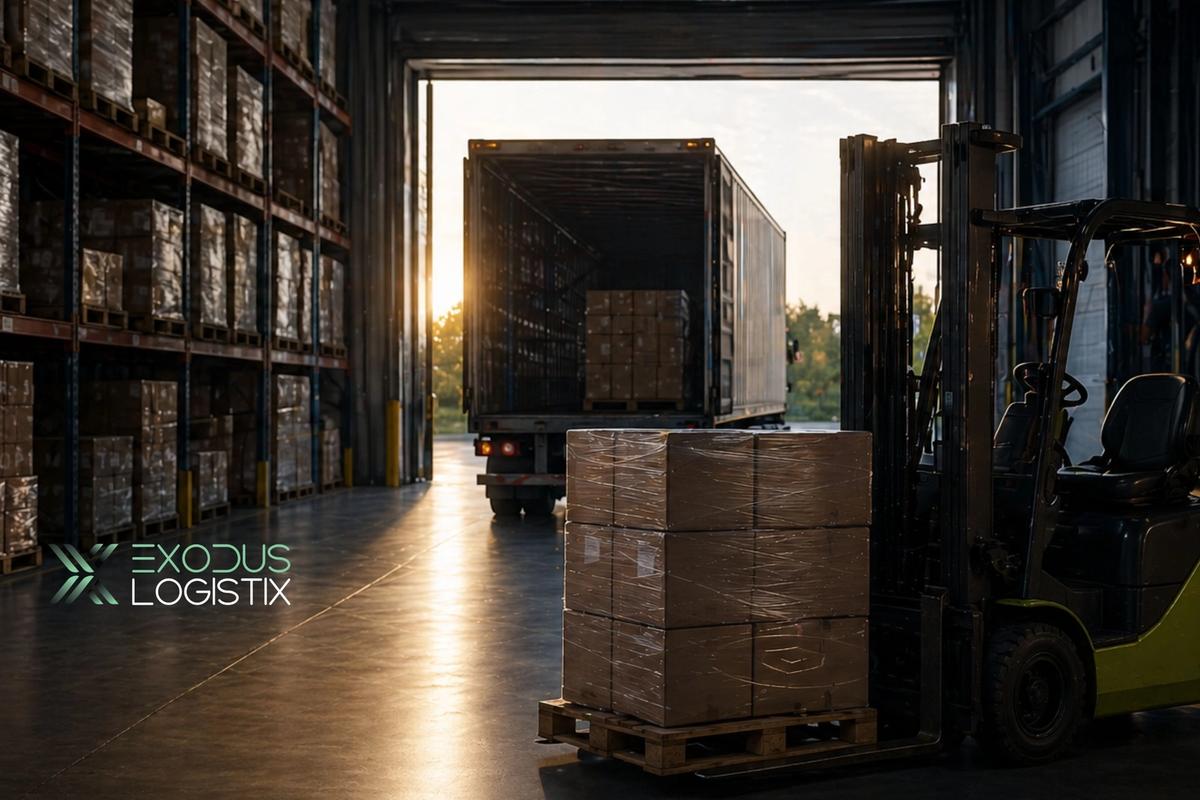
Excess inventory is usually treated as a storage problem.
But in high-performing supply chains, it’s a capacity problem.
When inventory stays in place, it doesn’t just take up space.It limits throughput, slows operations, and reduces flexibility across the entire system.
Liquidation freight changes that.
Not by removing inventory —but by restoring capacity through structured outbound movement.
What Is Liquidation Freight in Supply Chains?
Liquidation freight is the structured transportation of excess, obsolete, or returned inventory out of primary operations and into secondary channels.
This includes:
- liquidation partners
- redistribution centers
- alternative markets
But more importantly, it functions as a capacity release mechanism within the supply chain.
Instead of allowing inventory to remain static, liquidation freight ensures that space, labor, and infrastructure remain available for active operations.
Why Capacity, Not Inventory
Is the Real Constraint?
In most supply chains, inventory isn’t the limiting factor.
Capacity is.
When excess inventory builds up:
- warehouse space becomes restricted
- staging areas become congested
- handling efficiency decreases
- outbound flow slows down
The issue isn’t that there is too much inventory.It’s that the system can no longer move efficiently.
Liquidation freight addresses this by restoring movement and available capacity.
From Storage Management to Flow Engineering
Traditional approaches treat excess inventory as something to store or manage.
High-performing operations treat it as something to move strategically.
This shift changes the objective from:
- holding inventory → creating flow
- managing space → maintaining throughput
- reacting to buildup → preventing constraints
Liquidation freight becomes part of flow engineering, not just inventory cleanup.
How Liquidation Freight Restores Operational Capacity
When structured correctly, liquidation freight directly improves system performance.
1. Space Reallocation
Excess inventory is removed, freeing warehouse capacity for active goods.
2. Throughput Recovery
Reduced congestion allows faster staging, handling, and outbound processing.
3. Labor Efficiency
Teams spend less time navigating blocked or overcrowded areas.
4. Transportation Optimization
Consolidated outbound liquidation shipments improve routing and load utilization.
This creates a system where capacity is continuously available — not periodically recovered.
Designing Liquidation Freight Into the System
Liquidation freight should not be reactive.It should be built into daily operations.
This includes:
Inventory Segmentation
Identifying excess inventory early based on movement patterns.
Scheduled Outbound Movement
Planning regular liquidation shipments instead of one-time clearance events.
Transportation Alignment
Integrating liquidation freight with existing routes and capacity.
Continuous Flow Monitoring
Ensuring excess inventory does not accumulate beyond control.
When designed this way, liquidation becomes predictable, repeatable, and scalable.
The Risk of Reactive Liquidation
Without structure, liquidation becomes reactive.
This leads to:
- sudden warehouse bottlenecks
- rushed transportation decisions
- inefficient shipment consolidation
- higher operational costs
Reactive liquidation solves symptoms.Structured liquidation prevents them.
Supporting Multi-Facility Supply Chains
In multi-location operations, capacity constraints are not isolated.
They spread.
One congested facility affects:
- inbound scheduling
- outbound flow
- network balance
Liquidation freight must be coordinated across locations to:
- maintain consistent capacity
- align transportation planning
- prevent localized bottlenecks from becoming system-wide issues
This ensures the entire network operates as one system.
Transportation as the Execution Layer
Liquidation strategies fail without execution.
Transportation is what enables:
- timely removal of excess inventory
- efficient routing across locations
- alignment with outbound capacity
Without transportation, inventory remains static.With it, liquidation becomes continuous movement.
Benefits of Treating Liquidation as a Capacity Strategy
When liquidation freight is structured as a system function, businesses gain:
- Consistent warehouse availability
- Improved operational throughput
- Reduced congestion and delays
- Better labor utilization
- More efficient transportation planning
- Scalable supply chain performance
The result is not just cleaner warehouses —but a more efficient, controlled logistics system.
Conclusion: Capacity Drives Performance
Supply chain performance depends on how well systems maintain flow.
Excess inventory is not just a storage issue.It is a capacity constraint that affects the entire operation.
Liquidation freight restores that capacity by ensuring inventory continues to move — even when it no longer serves primary demand.
At Exodus Logistix, transportation programs are designed to support structured liquidation freight — helping businesses maintain capacity, improve efficiency, and sustain consistent supply chain flow.
Learn More
Explore how structured logistics solutions support continuous movement and operational efficiency:👉 https://exoduslogistix.com/services/
Tags

About the Author
exodus logistix
Exodus Logistix provides freight and logistics solutions built on disciplined planning, clear coordination, and operational accountability. With experience supporting complex shipments across multiple industries, the team focuses on reducing disruption, improving reliability, and helping businesses move freight with confidence.