
When Should Shippers Consider Intermodal Instead of Truckload?
Quick Answer
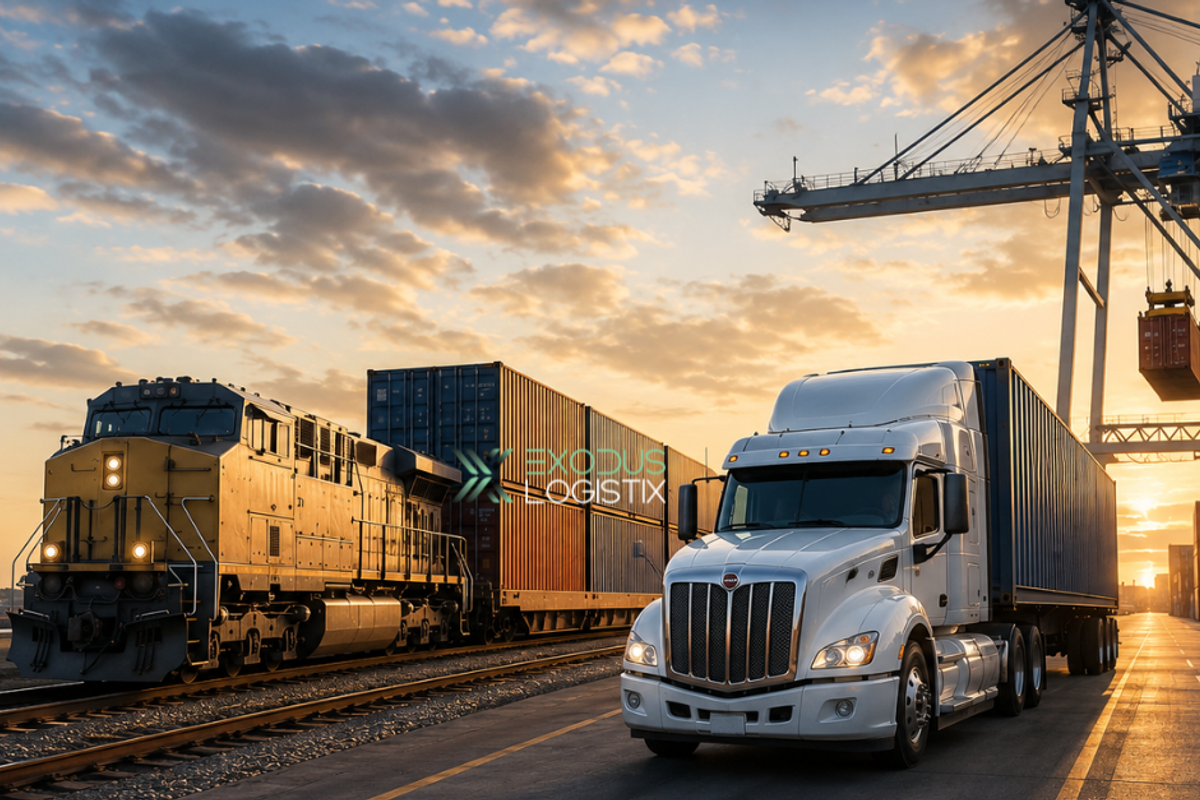
Intermodal transportation may be worth considering when freight moves consistently across longer distances, has enough scheduling flexibility for rail transit, and does not require the speed or direct routing of over-the-road truckload service.
The decision should not be based on freight rates alone.
Shippers should evaluate the entire lane—including distance, transit requirements, shipment consistency, origin and destination access, capacity needs, and service expectations—to determine whether intermodal fits the operation.
For the right freight and the right lanes, intermodal can provide another way to balance transportation cost, capacity, and long-term network efficiency.
Why the Truckload vs. Intermodal Decision Matters
Transportation mode decisions have consequences beyond the price of an individual shipment.
A lower quoted rate does not necessarily mean a transportation option is the best operational fit.
Transit time, reliability, handling requirements, appointment windows, freight characteristics, and the consistency of a shipping lane all matter.
That is why experienced shippers should ask a broader question:
Does the transportation mode fit how this freight actually needs to move?
In some situations, truckload is clearly the better choice.
In others, intermodal deserves consideration.
The opportunity is often found by evaluating lanes individually rather than applying one transportation mode across an entire network.
Five Things Shippers Should Evaluate Before Moving Freight to Intermodal
1. Start With the Lane, Not the Rate
One of the most important observations in transportation planning is that not every lane should be optimized the same way.
Intermodal generally becomes more relevant when freight is moving over longer distances and the origin and destination can be efficiently served through an intermodal network.
A shipper evaluating a lane should consider:
- origin and destination
- shipment distance
- freight frequency
- pickup requirements
- delivery requirements
- available transportation infrastructure
- required transit time
This is why a transportation network review can uncover opportunities that are easy to miss when shipments are evaluated only one load at a time.
A lane that has historically moved by truckload should not automatically remain truckload forever.
Shipping patterns change.
Markets change.
Customer requirements change.
The transportation strategy should be reviewed as those conditions evolve.
2. Transit-Time Flexibility Is a Critical Factor
Truckload transportation provides direct over-the-road movement and is often the appropriate choice when transit speed or tight delivery requirements are the priority.
Intermodal operates differently.
Freight typically moves through a combination of truck and rail transportation, which means the shipment must fit the transit profile of the intermodal network.
For that reason, shippers should understand exactly how much flexibility exists in the delivery schedule.
Consider two shipments moving along a similar long-distance corridor.
One has an urgent delivery requirement with very little scheduling flexibility.
The other is part of a predictable replenishment program with more lead time built into the schedule.
The first shipment may be better suited to truckload.
The second may be a stronger candidate for intermodal evaluation.
Mode selection should follow the operational requirement—not the other way around.
3. Consistent Freight Can Create Better Planning Opportunities
Predictability matters in transportation.
When businesses regularly move freight between the same regions, transportation teams have more information to work with.
They can evaluate:
- recurring volumes
- shipment frequency
- seasonal patterns
- historical transit requirements
- appointment consistency
- capacity needs
This creates an opportunity to move beyond transactional load-by-load decisions.
Instead of asking:
“How should we move this shipment?”
The better question may become:
“How should we manage this lane?”
That distinction matters.
Recurring long-haul freight can provide the consistency needed to evaluate whether intermodal should become part of a broader transportation strategy rather than simply an occasional alternative.
4. The Lowest Rate Is Not Always the Lowest Transportation Cost
Transportation decisions should account for more than the linehaul rate.
The real operational impact of a transportation mode may include:
- transit time
- inventory requirements
- pickup and delivery coordination
- service reliability
- shipment visibility
- handling requirements
- potential disruptions
A transportation option that appears less expensive on paper may create additional operational costs if it does not align with the business.
The opposite can also be true.
A shipper may continue using a familiar transportation mode without realizing that certain lanes could be handled more efficiently through another strategy.
This is why comparing truckload and intermodal should involve the total transportation requirement, not simply two rates on a spreadsheet.
5. Intermodal Does Not Have to Replace Truckload
This is an important distinction.
The decision is rarely:
Truckload or intermodal for everything?
A more practical transportation strategy may use both.
Businesses can evaluate their network and identify which shipments are best suited for:
- full truckload
- intermodal
- partial truckload
- LTL
- dedicated transportation
- specialized transportation
Truckload may remain the right solution for time-sensitive or operationally complex shipments.
Intermodal may complement it on qualifying long-haul lanes where shipment characteristics and schedules support the mode.
The goal is not to move as much freight as possible to one transportation mode.
The goal is to use the right mode for the right freight.
Truckload vs. Intermodal: What Should Shippers Consider?
Consideration
Truckload
Intermodal
Transportation Method
Direct over-the-road truck movement
Combination of truck and rail
Transit Flexibility
Often suited to tighter transit requirements
Typically requires greater schedule planning
Lane Profile
Flexible across many origins and destinations
Strongest on qualifying intermodal lanes
Long-Distance Freight
Commonly used
May offer an alternative on appropriate lanes
Shipment Planning
Important
Particularly important for successful execution
Best Fit
Depends on freight and service requirements
Depends on lane, schedule, freight, and network access
Neither mode is automatically better.
The correct choice depends on the shipment.
What Shippers Should Look for in Their Transportation Network
Businesses do not necessarily need to reconsider every shipment.
A better starting point is identifying lanes that deserve a closer look.
Potential candidates for transportation mode evaluation may include:
- recurring long-distance shipments
- predictable freight volumes
- lanes with sufficient transit flexibility
- consistent origin-to-destination patterns
- shipments where transportation cost is a significant concern
- freight currently moving under a one-mode-fits-all strategy
These characteristics do not automatically mean intermodal is the correct solution.
They indicate that the lane may be worth evaluating.
Why Visibility and Coordination Matter in Intermodal Transportation
Intermodal involves multiple stages of transportation.
That makes coordination especially important.
Effective execution may require alignment between:
- origin pickup
- rail movement
- equipment availability
- destination drayage
- delivery appointments
- shipment tracking
- customer communication
A transportation strategy is only valuable if it can be executed reliably.
That is why visibility and proactive communication should be part of the intermodal decision—not something considered after the shipment begins moving.
What This Means for Shippers
The biggest opportunity may not be finding a cheaper rate.
It may be finding a better transportation strategy for specific lanes.
Businesses evaluating their freight networks should ask:
- Are we using truckload because it is operationally the best option—or simply because we have always used it?
- Which long-distance lanes repeat consistently?
- Which shipments have enough scheduling flexibility to consider alternatives?
- Are we evaluating transportation based only on rates?
- Could different transportation modes serve different parts of our network more effectively?
These questions can uncover opportunities for better transportation planning.
Frequently Asked Questions
What is intermodal transportation?
Intermodal transportation moves freight using more than one mode of transportation, commonly combining truck and rail while keeping freight within the same shipping equipment during major portions of the journey.
Is intermodal cheaper than truckload?
Not always.
Transportation economics depend on the lane, distance, market conditions, shipment requirements, and available capacity. Shippers should compare the overall transportation strategy rather than assume one mode will always cost less.
When should a shipper consider intermodal?
Intermodal may be worth evaluating for recurring long-distance freight with predictable shipping patterns and sufficient transit-time flexibility.
Is truckload faster than intermodal?
Truckload often provides more direct transportation and may be better suited to shipments with tighter transit requirements. Actual transit performance depends on the specific lane and service.
Can businesses use both truckload and intermodal?
Yes.
A transportation network can use multiple modes based on the operational requirements of individual shipments and lanes.
Final Thoughts
Choosing between truckload and intermodal should not begin with one question:
Which one is cheaper?
It should begin with a better question:
Which transportation strategy best fits this lane?
Distance, shipment frequency, transit requirements, freight characteristics, capacity, and operational expectations all influence that decision.
For some freight, truckload will remain the right solution.
For qualifying long-distance lanes, intermodal may provide another option worth evaluating.
The strongest transportation networks are not built around one mode. They are built by matching the right transportation solution to the right freight—and continuously reevaluating those decisions as business requirements change.
To learn more about transportation solutions designed around planning, visibility, communication, coordination, and execution, visit:
Tags

About the Author
exodus logistix
Exodus Logistix provides freight and logistics solutions built on disciplined planning, clear coordination, and operational accountability. With experience supporting complex shipments across multiple industries, the team focuses on reducing disruption, improving reliability, and helping businesses move freight with confidence.