
How Modular Home Transportation Works: From Factory to Foundation
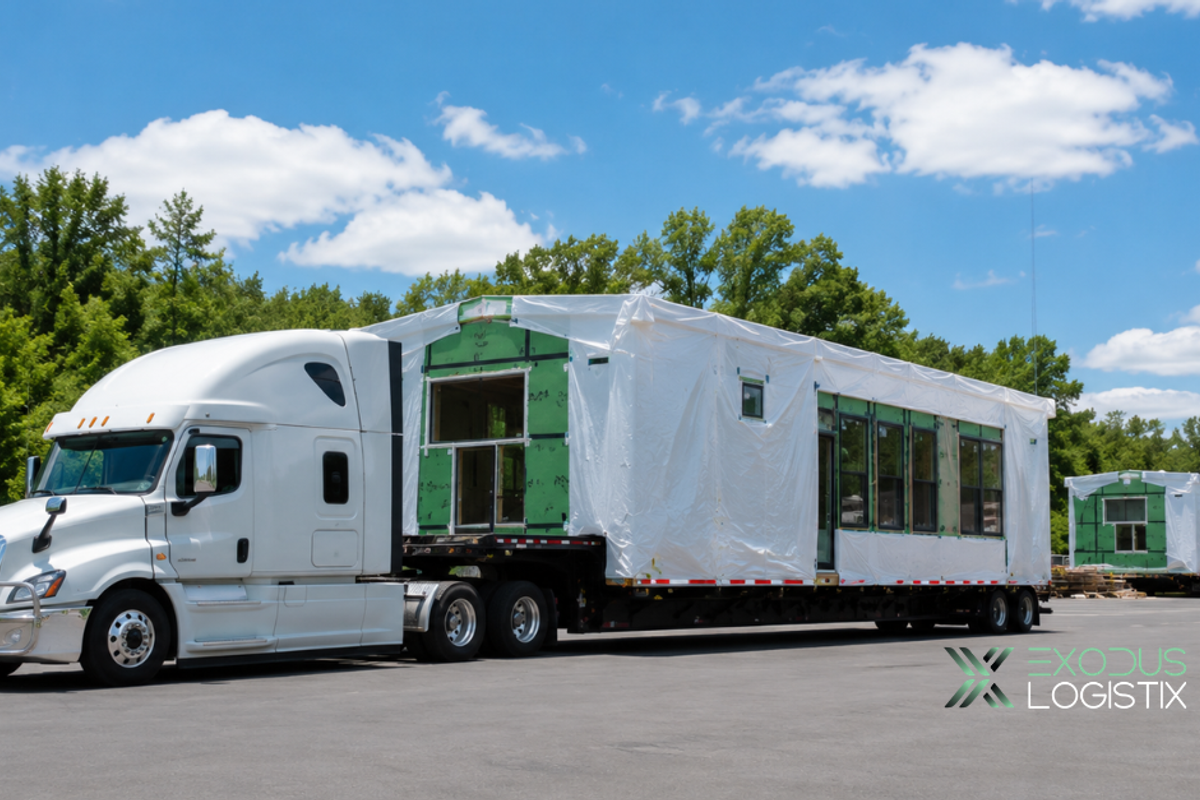
Modular homes are typically transported by specialized freight carriers experienced in oversized load transportation. Delivery involves coordination between the manufacturer, transportation provider, permitting agencies, pilot car operators, utility companies, and site preparation teams to move home sections safely from the factory to the final building site.
Because modular home sections often exceed standard size limits, transportation requires permits, route planning, escort vehicles, and careful scheduling long before delivery day.
Why Modular Home Transportation Requires Specialized Logistics
Unlike traditional building materials, modular homes are constructed off-site and delivered as large pre-built sections.
These sections must be transported from the manufacturing facility to the final property while protecting the structure and complying with transportation regulations.
The process involves far more than simply loading a house onto a trailer.
Successful delivery requires coordination across multiple stakeholders to ensure the home arrives safely and on schedule.
Who Ships Modular Homes?
Modular homes are typically transported by specialized carriers experienced in oversized and heavy-haul freight.
These transportation providers understand:
- oversized load regulations
- state permitting requirements
- route restrictions
- escort vehicle coordination
- utility clearance challenges
- site delivery logistics
Because modular home sections can be both wide and heavy, transportation planning becomes a critical part of the overall construction timeline.
How Are Modular Homes Delivered?
The transportation process typically begins weeks before the home leaves the factory.
Step 1: Manufacturer Coordination
Once the modular home is completed, transportation planning begins with the manufacturer.
Key details include:
- module dimensions
- weight specifications
- shipment sequencing
- loading schedules
- destination requirements
Transportation providers use this information to begin permit applications and route planning.
Step 2: Route Analysis and Planning
Before permits are obtained, transportation teams evaluate potential routes.
Route planning may include reviewing:
- bridge clearances
- road width restrictions
- construction zones
- railroad crossings
- traffic conditions
- turning requirements
The goal is to identify the safest and most efficient path to the delivery site.
Step 3: Permit Acquisition
Because modular home sections often exceed legal transportation dimensions, permits are usually required.
Permit requirements vary by state and may involve:
- oversized load permits
- route approvals
- travel restrictions
- escort requirements
Permit coordination often begins well in advance of the scheduled move.
Step 4: Pilot Car Coordination
Many modular home shipments require escort vehicles.
Pilot cars help:
- warn approaching traffic
- monitor roadway conditions
- assist with lane positioning
- communicate with drivers during transport
Escort requirements vary based on the size of the load and state regulations.
Step 5: Utility Coordination
One of the most important aspects of modular home transportation involves utility clearances.
Transportation routes may encounter:
- power lines
- communication cables
- traffic signals
- utility infrastructure
In some cases, utility companies coordinate temporary adjustments to ensure safe passage.
Without utility coordination, transportation delays can occur even when permits have been approved.
Step 6: Site Preparation
While transportation planning is underway, the delivery site must be prepared.
This may include:
- foundation completion
- site grading
- access road preparation
- crane positioning
- staging area setup
Delivery timing is often coordinated directly with installation teams.
Step 7: Transportation and Delivery
On delivery day, modular home sections are transported from the factory to the site using specialized trailers.
Throughout the move, transportation teams monitor:
- route conditions
- escort coordination
- weather impacts
- traffic conditions
- delivery timing
Communication remains critical throughout the process.
Step 8: Placement on the Foundation
Once the home arrives, cranes or specialized equipment position each section onto the prepared foundation.
Installation crews then secure, connect, and complete the assembly process.
At this point, transportation transitions into final construction and finishing work.
Common Challenges During Modular Home Transportation
Modular home deliveries can face several challenges, including:
Weather Delays
High winds, storms, and poor visibility can impact transportation schedules.
Route Restrictions
Unexpected construction or roadway limitations may require route adjustments.
Utility Clearance Issues
Overhead infrastructure often requires careful coordination before movement can occur.
Site Access Constraints
Narrow roads, steep grades, or limited staging areas can complicate delivery.
Proactive planning helps reduce these risks and improve project execution.
Why Early Coordination Matters
Modular home transportation involves multiple parties working together toward a single delivery schedule.
Successful projects depend on coordination between:
- manufacturers
- transportation providers
- permitting agencies
- utility companies
- installation teams
- property owners
When planning begins early, businesses and homeowners can reduce delays and maintain project timelines.
Supporting Complex Transportation Projects
Modular home transportation combines elements of oversized freight, project logistics, route planning, and site coordination.
At Exodus Logistix, transportation solutions are built around structured planning, operational visibility, and execution—helping businesses manage specialized freight movements with greater confidence and control.
Final Thoughts
Modular homes are delivered through a carefully coordinated transportation process that begins long before the shipment leaves the factory.
From permits and pilot cars to utility coordination and site preparation, every stage plays a role in ensuring a safe and successful delivery.
Understanding how modular homes are transported helps project teams prepare for the logistics challenges that come with moving oversized structures from factory to foundation.
To learn more about transportation solutions for specialized freight and oversized load projects, visit:
Tags

About the Author
exodus logistix
Exodus Logistix provides freight and logistics solutions built on disciplined planning, clear coordination, and operational accountability. With experience supporting complex shipments across multiple industries, the team focuses on reducing disruption, improving reliability, and helping businesses move freight with confidence.