
How Do Hospitals Move Medical Equipment Between Facilities Without Disrupting Operations?
Quick Answer
Hospitals and healthcare networks frequently move medical equipment between facilities.
The challenge isn't simply transportation.
It's coordinating equipment availability, facility schedules, delivery timing, documentation, and handling requirements without disrupting patient care or daily operations.
Successful inter-facility healthcare transportation requires visibility, communication, and disciplined execution from pickup through delivery.
Why Equipment Relocation Happens More Often Than People Think
Healthcare organizations constantly adjust resources across their networks.
Equipment may be moved because of:
- Facility expansions
- Department relocations
- Equipment upgrades
- Temporary demand shifts
- New clinic openings
- Preventive maintenance schedules
- Capacity balancing between locations
In many cases, transportation becomes part of a larger operational initiative.
The equipment itself may be valuable.
The timing is often even more important.
Transportation Delays Can Create Operational Consequences
Unlike standard commercial freight, medical equipment transportation often affects scheduled activities.
A delayed shipment can impact:
- Installation schedules
- Clinical operations
- Facility readiness
- Equipment deployment plans
- Staff coordination
- Vendor schedules
The shipment may only be one piece of the project.
But it often determines when the project can move forward.
Visibility Becomes More Important Than Speed
Many healthcare organizations focus on transit time.
Operationally, visibility is often more valuable.
Healthcare teams typically need answers to questions such as:
- Has the equipment been picked up?
- Is transportation running on schedule?
- Has delivery been confirmed?
- Are there any delays?
- Is documentation available?
Reliable updates allow healthcare teams to coordinate around the shipment instead of reacting to uncertainty.
Healthcare logistics works best when transportation information flows as efficiently as the freight itself.
Medical Equipment Requires More Than Standard Freight Handling
Many healthcare shipments involve:
- Diagnostic equipment
- Imaging systems
- Laboratory equipment
- Medical devices
- Specialty healthcare assets
These shipments often require:
- Controlled handling
- Secure transportation
- Documentation
- White-glove services
- Time-definite delivery
Transportation planning begins with understanding the equipment—not simply booking a truck.
Multi-Facility Healthcare Networks Create Additional Complexity
As healthcare organizations expand, transportation becomes more complex.
Equipment may move between:
- Hospitals
- Outpatient clinics
- Surgery centers
- Laboratories
- Distribution facilities
- Healthcare campuses
Each location may have different delivery procedures, access requirements, schedules, and operational priorities.
Successful transportation depends on coordinating all of them.
Why Communication Protects Healthcare Operations
Healthcare freight rarely succeeds through transportation alone.
It succeeds through communication.
Effective healthcare transportation programs typically include:
- Proactive shipment updates
- Clear escalation procedures
- Pickup confirmation
- Delivery confirmation
- Chain-of-custody documentation
- Exception management
When issues arise, response time often matters as much as the issue itself.
Why Healthcare Organizations Work With Exodus Logistix
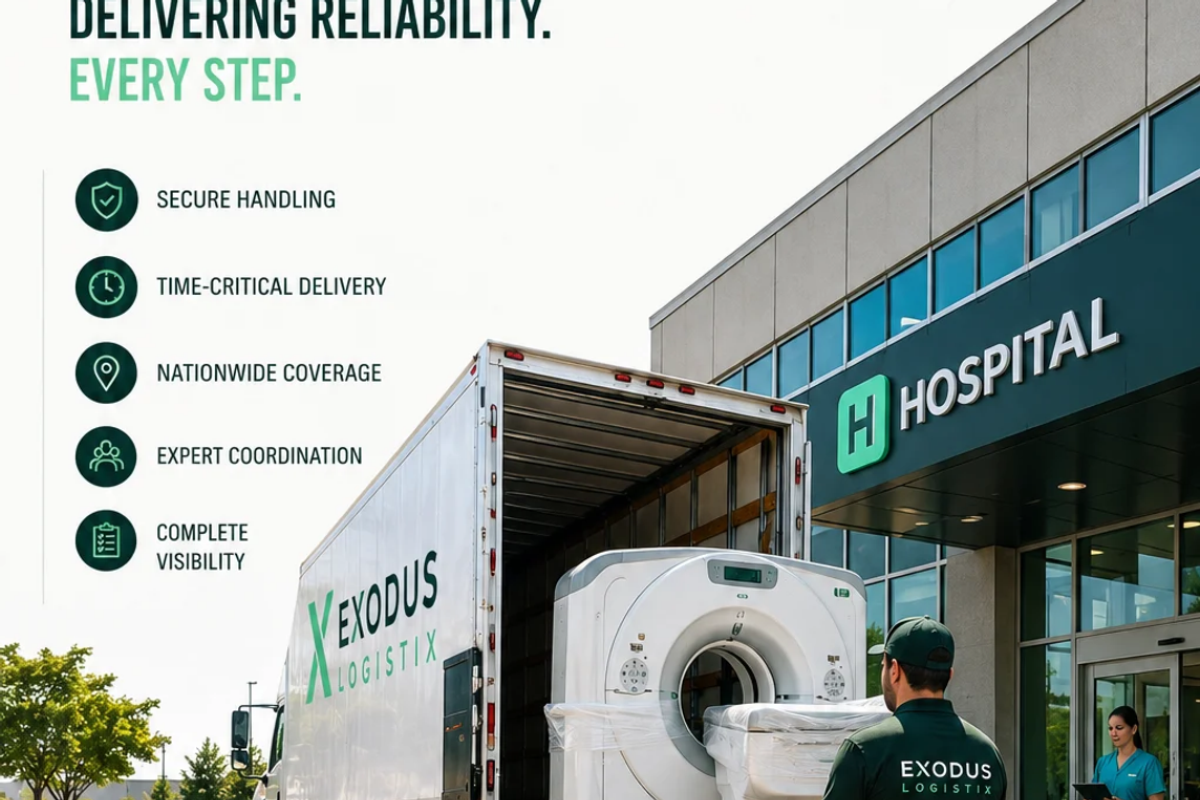
At Exodus Logistix, healthcare transportation is built around accountability, visibility, and operational coordination.
We support healthcare organizations with:
- Medical equipment transportation
- Diagnostic equipment shipping
- Inter-facility transfers
- Laboratory logistics
- White-glove transportation
- Time-critical healthcare freight
Our objective is simple:
Help healthcare organizations move critical equipment without creating operational disruption.
Frequently Asked Questions
What is inter-facility medical transportation?
Inter-facility transportation involves moving medical equipment, supplies, or healthcare assets between hospitals, clinics, laboratories, and healthcare facilities.
Why is visibility important in healthcare logistics?
Visibility helps healthcare teams coordinate schedules, reduce uncertainty, and respond quickly if transportation issues occur.
What types of medical equipment are commonly relocated?
Hospitals frequently move imaging equipment, laboratory equipment, diagnostic devices, medical technology, and specialty healthcare assets.
Do healthcare shipments require special handling?
Many healthcare shipments require controlled handling, documentation, white-glove services, and time-sensitive delivery coordination.
Final Thoughts
Moving medical equipment between healthcare facilities isn't simply a freight transaction.
It's an operational event that requires coordination across transportation teams, healthcare staff, facilities, and vendors.
The most successful healthcare transportation programs focus on visibility, communication, handling requirements, and execution—not simply moving freight from one address to another.
At Exodus Logistix, we believe healthcare logistics works best when transportation supports operations instead of disrupting them.
Need Healthcare Logistics Support?
Exodus Logistix provides nationwide healthcare transportation solutions for hospitals, clinics, laboratories, medical device companies, and healthcare networks.
Learn more: https://exoduslogistix.com/industries/healthcare-logistics
Tags

About the Author
exodus logistix
Exodus Logistix provides freight and logistics solutions built on disciplined planning, clear coordination, and operational accountability. With experience supporting complex shipments across multiple industries, the team focuses on reducing disruption, improving reliability, and helping businesses move freight with confidence.