
How Better Lane Analysis Improves Transportation Performance
Quick Answer
Every transportation lane has its own operational characteristics.
Freight volumes, equipment availability, transit expectations, shipping frequency, and transportation costs can vary significantly from one lane to another.
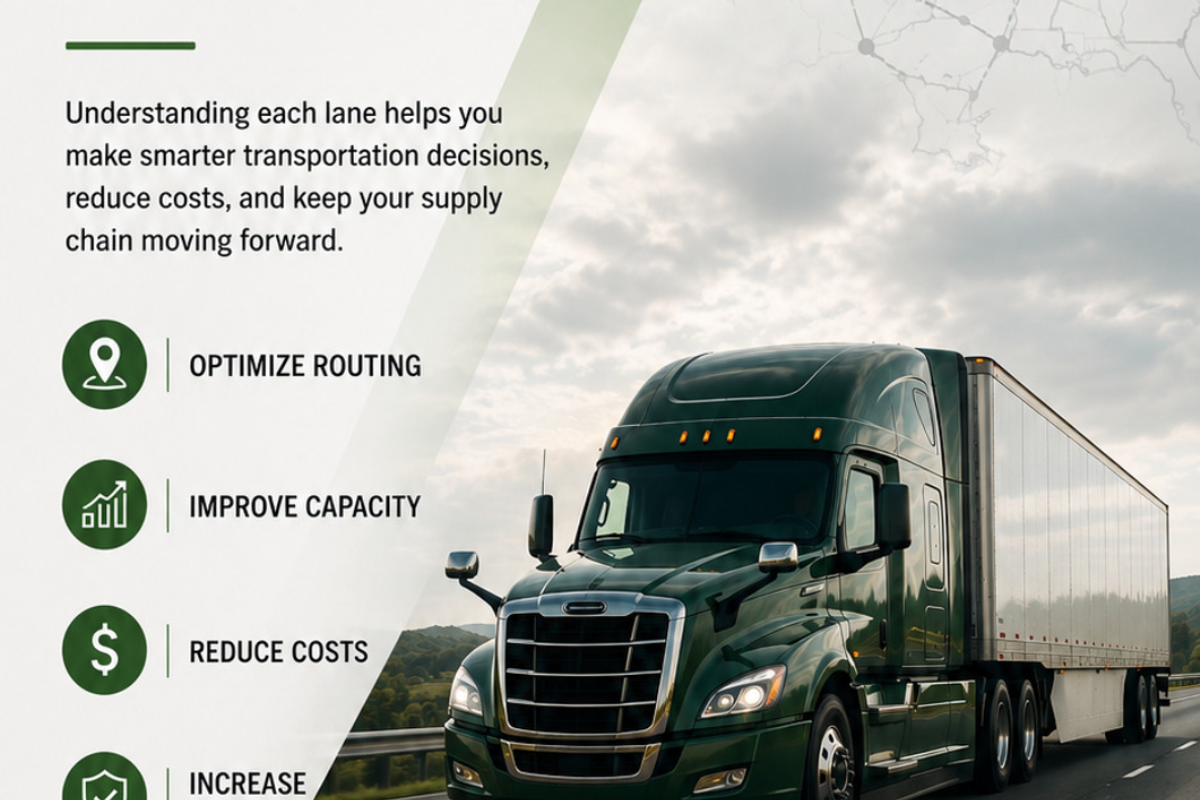
When businesses regularly evaluate how freight moves across their transportation network, they can identify opportunities to improve routing, optimize transportation modes, strengthen capacity planning, and reduce unnecessary freight costs.
At Exodus Logistix, transportation planning begins with understanding how each lane performs—not simply finding available capacity.
Every Shipping Lane Has Different Transportation Requirements
It's easy to think of transportation as one continuous operation.
In reality, every shipping lane behaves differently.
Some lanes have dependable truck capacity throughout the year.
Others experience seasonal equipment shortages or changing market conditions.
Certain lanes create opportunities for Intermodal transportation.
Others are better suited for Full Truckload, Partial Truckload, or Shared Truckload.
Treating every lane the same often leads to missed opportunities for improving transportation performance.
Understanding how each lane operates creates a stronger foundation for transportation planning.
Transportation Costs Are Influenced by More Than Freight Rates
When transportation costs increase, freight rates often receive the most attention.
They should.
But rates are only one part of the equation.
Transportation performance is also influenced by operational conditions within each lane, including:
- Freight demand
- Equipment availability
- Driver capacity
- Seasonal shipping patterns
- Transit distance
- Delivery commitments
- Empty-mile exposure
Because these conditions change over time, transportation strategies should evolve with them.
Regular lane analysis helps businesses respond proactively instead of reacting after costs begin to increase.
Better Lane Analysis Creates Better Transportation Decisions
Transportation planning is most effective when it's supported by operational data rather than assumptions.
Evaluating individual lanes helps businesses determine:
- Which transportation mode is the best operational fit
- Where trailer utilization can be improved
- Whether freight consolidation opportunities exist
- Which lanes are experiencing capacity constraints
- Where transportation costs can be reduced
The objective isn't simply moving freight.
It's selecting the transportation strategy that delivers the greatest operational value for each lane.
One Transportation Strategy Doesn't Fit Every Lane
Using the same transportation approach across every shipping lane may simplify planning, but it doesn't always produce the best results.
Some lanes consistently perform well with:
- Full Truckload
Others may benefit from:
- Partial Truckload
Certain freight flows create opportunities for:
- Shared Truckload
Long-haul lanes with consistent volume may support:
- Intermodal Transportation
The best transportation strategy depends on how freight moves through the lane—not simply where it's being delivered.
Transportation Networks Continue to Change
Transportation planning isn't static.
Markets shift.
Customer demand changes.
Production schedules fluctuate.
Equipment availability evolves.
Capacity conditions improve—or tighten.
As transportation networks change, businesses that regularly evaluate lane performance are better positioned to adjust before operational challenges become transportation problems.
Planning should evolve alongside the network.
Visibility Strengthens Transportation Planning
Lane analysis isn't simply reviewing historical shipments.
It's understanding how today's operating conditions influence tomorrow's transportation decisions.
Effective lane analysis evaluates:
- Shipment frequency
- Delivery performance
- Equipment utilization
- Capacity trends
- Customer requirements
- Transportation costs
- Network opportunities
The more visibility businesses have into how their transportation network performs, the more informed their planning decisions become.
Why Businesses Work With Exodus Logistix
At Exodus Logistix, transportation planning begins with understanding how freight moves across your network.
We evaluate shipping lanes, freight characteristics, equipment availability, transportation modes, operational priorities, and customer requirements before recommending the transportation strategy that best supports your operation.
Whether freight moves by:
- Full Truckload
- Partial Truckload
- Shared Truckload
- Intermodal
- LTL
- Drop Trailer Programs
our objective remains the same:
Build transportation strategies that improve operational efficiency—not simply move freight from one point to another.
Frequently Asked Questions
What is lane analysis in transportation?
Lane analysis is the process of evaluating individual shipping lanes to understand transportation costs, freight patterns, equipment availability, capacity, and overall operational performance.
Why is lane analysis important?
Lane analysis helps businesses improve transportation efficiency, strengthen capacity planning, reduce unnecessary transportation costs, and select the most appropriate transportation strategy for each shipping lane.
How often should transportation lanes be reviewed?
Transportation lanes should be evaluated regularly because freight volumes, customer demand, equipment availability, and market conditions continuously change.
Can lane analysis reduce transportation costs?
Yes. By understanding how freight moves across individual lanes, businesses can identify opportunities to improve routing, optimize transportation modes, increase trailer utilization, and reduce unnecessary transportation spending.
Final Thoughts
Every transportation lane tells a different story.
Understanding how each lane performs helps businesses make smarter transportation decisions before freight ever leaves the dock.
At Exodus Logistix, we believe the strongest transportation strategies begin with understanding the network—not simply securing capacity.
Because better transportation isn't built one shipment at a time.
It's built by making better decisions across every lane in your network.
To learn more about our transportation solutions, visit:
Tags

About the Author
exodus logistix
Exodus Logistix provides freight and logistics solutions built on disciplined planning, clear coordination, and operational accountability. With experience supporting complex shipments across multiple industries, the team focuses on reducing disruption, improving reliability, and helping businesses move freight with confidence.