
FTL-vs-LTL -freight
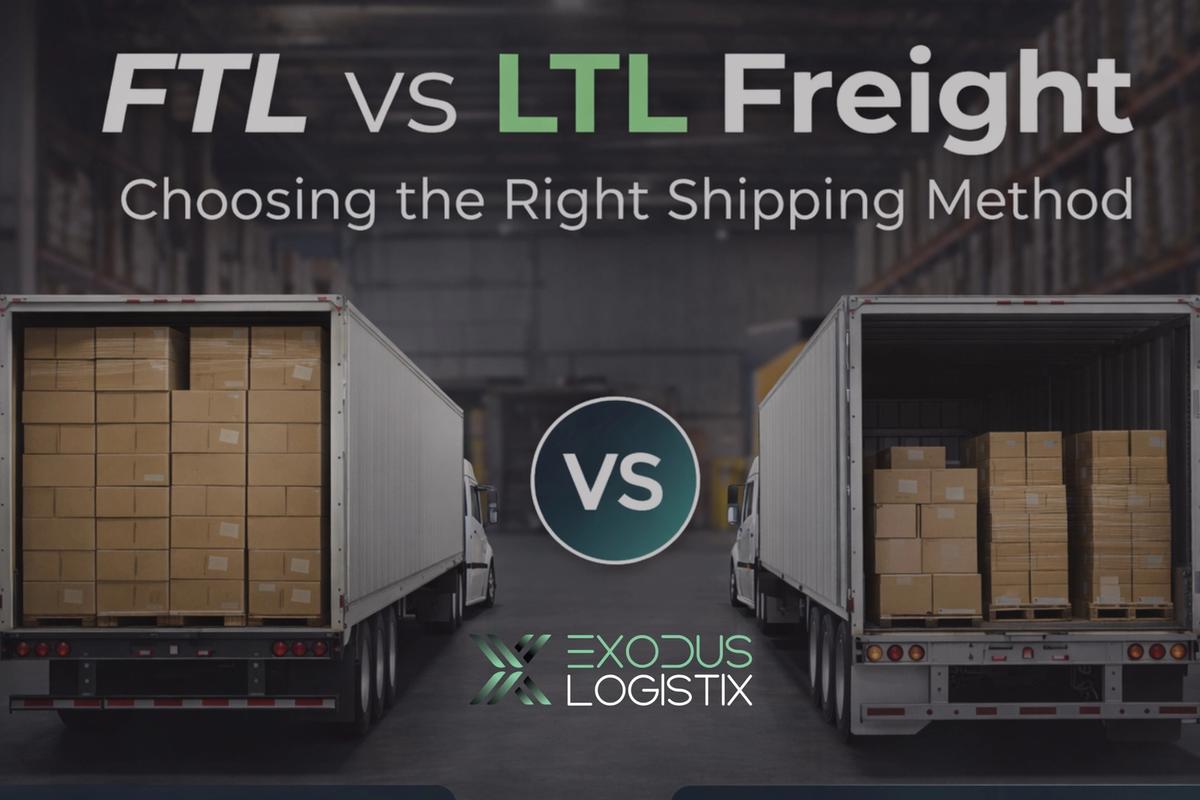
Freight transportation is not one-size-fits-all.
Choosing between full truckload (FTL) and less-than-truckload (LTL) shipping plays a critical role in cost, transit time, and overall supply chain efficiency.
Each method serves a different purpose. The key is understanding when to use each — and how they fit into a structured logistics strategy.
What Is FTL Freight?
Full truckload (FTL) shipping refers to moving freight that occupies an entire trailer.
In FTL shipments:
- one shipment is assigned to one truck
- freight moves directly from pickup to delivery
- there are minimal stops or transfers
This method is typically used for large shipments, high-volume freight, or time-sensitive deliveries.
Because the truck is dedicated to a single shipment, FTL provides greater control over transit time and handling.
What Is LTL Freight?
Less-than-truckload (LTL) shipping is used when freight does not require a full trailer.
In LTL shipments:
- multiple shipments from different shippers share one truck
- freight is consolidated and routed through carrier networks
- shipments may pass through multiple terminals
LTL allows businesses to move smaller shipments cost-effectively by sharing transportation space.
Key Differences Between FTL and LTL
Understanding the differences between FTL and LTL helps businesses choose the right shipping method for their needs.
Shipment Size
- FTL: Best for large shipments that fill or nearly fill a trailer
- LTL: Ideal for smaller shipments that do not require full capacity
Transit Time
- FTL: Faster, with direct routes and fewer stops
- LTL: Longer transit times due to multiple stops and transfers
Handling
- FTL: Minimal handling, reducing risk of damage
- LTL: More handling at terminals and transfer points
Cost Structure
- FTL: Higher upfront cost, but cost-effective for large shipments
- LTL: Lower cost for smaller shipments through shared capacity
When to Use FTL Freight
FTL is typically the better option when:
- shipments are large or high-volume
- delivery timelines are strict
- freight is sensitive or high-value
- minimizing handling is a priority
FTL provides more predictable transit times and reduces the risk associated with multiple handling points.
When to Use LTL Freight
LTL is often the right choice when:
- shipments are smaller or less frequent
- cost efficiency is a priority
- delivery timelines are more flexible
- consolidation opportunities are available
LTL allows businesses to optimize transportation costs while still maintaining consistent freight movement.
How FTL and LTL Fit Into a Logistics Strategy
FTL and LTL are not competing options — they are complementary.
Most supply chains rely on a combination of both, depending on shipment size, urgency, and routing requirements.
A structured logistics strategy considers:
- shipment volume and frequency
- delivery timelines
- network routing efficiency
- cost optimization opportunities
By aligning the right shipping method with the right scenario, businesses can improve both efficiency and reliability.
Supporting Efficient Freight Movement
Transportation decisions impact more than just cost.
They influence inventory flow, delivery performance, and overall supply chain coordination.
Exodus Logistix supports both FTL and LTL freight through structured transportation programs designed to align shipment planning with execution.
By integrating full truckload and less-than-truckload strategies, businesses can move freight more efficiently while maintaining consistent service levels.
Building Smarter Transportation Programs
Choosing between FTL and LTL is not just about shipment size.
It is about structuring freight movement to match operational needs.
When transportation is aligned with supply chain requirements, businesses gain:
- better cost control
- improved delivery performance
- more predictable operations
Understanding how to use FTL and LTL effectively allows businesses to build logistics programs that are both flexible and efficient.
To learn more about how structured transportation solutions support efficient freight movement, visit:👉 https://exoduslogistix.com/services/
Tags

About the Author
exodus logistix
Exodus Logistix provides freight and logistics solutions built on disciplined planning, clear coordination, and operational accountability. With experience supporting complex shipments across multiple industries, the team focuses on reducing disruption, improving reliability, and helping businesses move freight with confidence.