
Food & Beverage Logistics: Protecting Product Integrity Through Structured Freight Execution
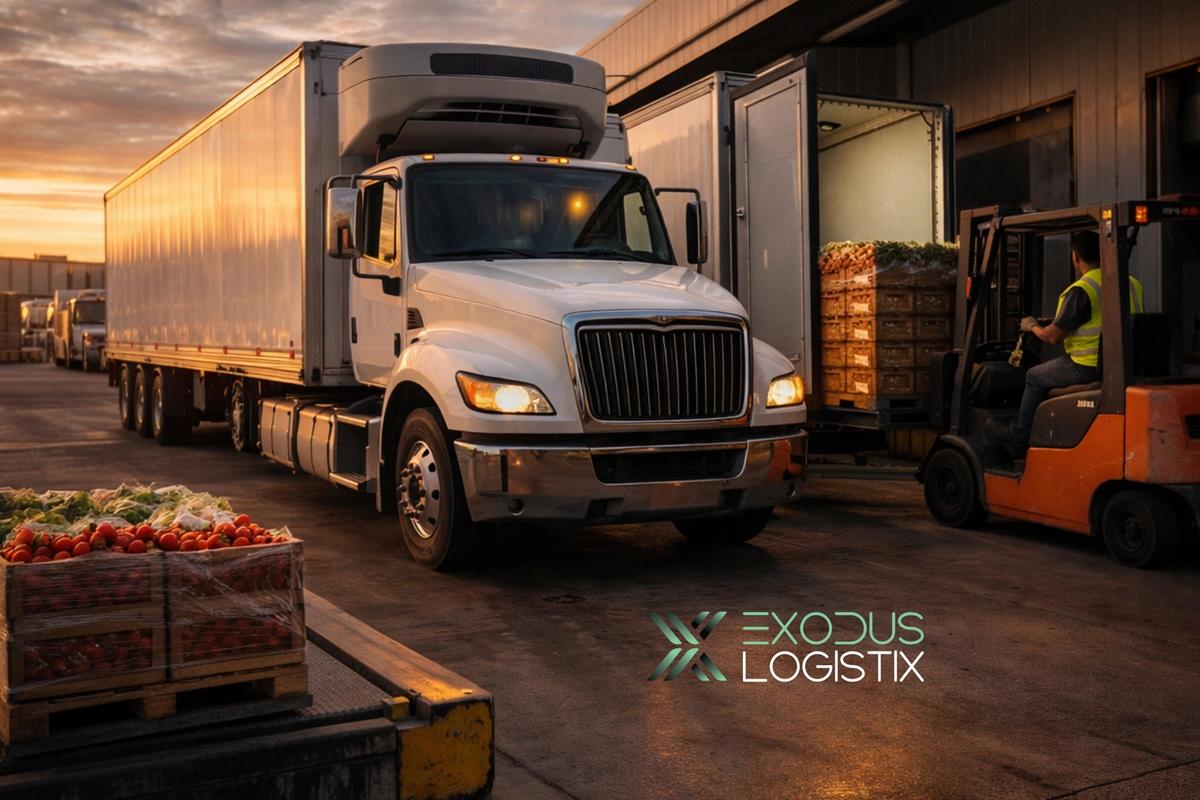
In food and beverage supply chains, variability is expensive.
Temperature fluctuations, transit delays, dock congestion, and handling exposure do more than disrupt schedules — they compromise product integrity.
Unlike general freight, food and beverage logistics operates within tight compliance standards, limited shelf life, and strict delivery windows.
In this environment, freight execution must be structured, disciplined, and aligned before movement begins.
At Exodus Logistix, food and beverage freight programs are built around risk control, temperature precision, and coordinated execution — because product integrity cannot be recovered once it is compromised.
What Is Food & Beverage Logistics?
Food and beverage logistics refers to the coordinated transportation of:
- Raw ingredients
- Perishable goods
- Refrigerated and frozen products
- Packaged consumer food items
- Beverage shipments (bottled, canned, bulk)
- Temperature-sensitive inventory
These supply chains require more than basic transportation management. They demand strict control over handling, transit time, and environmental conditions.
Freight performance directly affects product quality, compliance exposure, and customer satisfaction.
Why Food & Beverage Freight Requires Precision
Food and beverage shipments face operational risks that other industries may not:
Temperature Sensitivity
Even minor deviations in temperature-controlled freight can compromise product safety.
Shelf-Life Constraints
Delays reduce product viability and increase waste exposure.
Regulatory Compliance
Food-grade transportation requires adherence to sanitation, documentation, and traceability standards.
Dock Congestion
Retail distribution centers often operate under strict appointment windows.
Seasonal Demand Variability
Capacity planning must account for peak cycles and promotional spikes.
Without structured freight planning, these variables compound quickly.
The Role of Temperature-Controlled Transportation
Refrigerated (reefer) freight plays a central role in food and beverage logistics.
But temperature control alone is not enough.
Effective refrigerated freight programs require:
- Verified equipment standards
- Continuous temperature monitoring
- Pre-cooling procedures
- Carrier compliance protocols
- Clear communication between shipper and driver
- Defined escalation processes
Temperature integrity must be protected from pickup through delivery.
Once compromised, product recovery is not an option.
Common Risks in Food & Beverage Freight
Unstructured freight management often leads to:
- Spoilage from transit delays
- Rejected loads at delivery
- Compliance documentation gaps
- Increased claim exposure
- Expedited replacement shipments
- Brand damage from failed deliveries
In food and beverage logistics, reliability is not just operational — it is reputational.
How Structured Freight Programs Protect Product Integrity
Food and beverage supply chains benefit from disciplined freight architecture.
Key elements include:
1. Production-Aligned Scheduling
Freight timing is coordinated with manufacturing output and inventory turnover.
2. Carrier Vetting & Equipment Standards
Carriers are selected based on reefer reliability, compliance history, and communication discipline.
3. Defined Appointment Management
Retail and distribution center scheduling is managed proactively to avoid rejections.
4. Temperature & Condition Oversight
Monitoring protocols reduce risk exposure throughout transit.
5. Escalation Discipline
When disruptions occur, response procedures are immediate and structured.
When freight programs are engineered upstream, variability decreases and product integrity improves.
Food & Beverage Logistics vs Standard Freight
Food and beverage freight differs from general transportation programs in several ways:
Standard Freight
Food & Beverage Freight
Flexible delivery windows
Strict appointment compliance
Limited condition sensitivity
Temperature-controlled requirements
Lower compliance exposure
Regulatory oversight
Damage risk
Spoilage and safety risk
Cost-focused routing
Risk-controlled routing
This level of operational sensitivity requires freight programs built around prevention, not reaction.
Capacity Planning in Perishable Supply Chains
Capacity volatility is especially risky in food and beverage transportation.
During seasonal spikes, inadequate planning can result in:
- Last-minute carrier sourcing
- Premium spot rates
- Reduced equipment quality
- Transit inconsistency
Structured capacity planning ensures:
- Consistent reefer availability
- Stable lane performance
- Predictable transit timing
- Reduced emergency freight spend
In perishable supply chains, proactive capacity discipline is essential.
Execution Discipline Reduces Waste and Protects Margin
Food waste and spoilage represent measurable financial exposure.
Freight reliability directly influences:
- Product freshness
- Retail shelf availability
- Consumer satisfaction
- Brand credibility
- Margin stability
When execution is aligned with production, compliance standards, and temperature integrity, risk is controlled.
Strong food and beverage logistics is not reactive.
It is structured before the truck rolls.
Final Perspective: Stability Protects Product
In food and beverage supply chains, freight is not simply a cost center.
It is a safeguard.
When transportation programs are engineered around discipline, compliance, and coordinated execution, product integrity is protected and operational performance improves.
At Exodus Logistix, food and beverage freight programs are built for precision — ensuring temperature control, structured routing, and performance accountability across every lane.
Learn more about our food & beverage logistics solutions: 👉 https://exoduslogistix.com/industries/food-beverage
Tags

About the Author
exodus logistix
Exodus Logistix provides freight and logistics solutions built on disciplined planning, clear coordination, and operational accountability. With experience supporting complex shipments across multiple industries, the team focuses on reducing disruption, improving reliability, and helping businesses move freight with confidence.