
Colocation Move Checklist: What Your Freight Broker Needs to Know
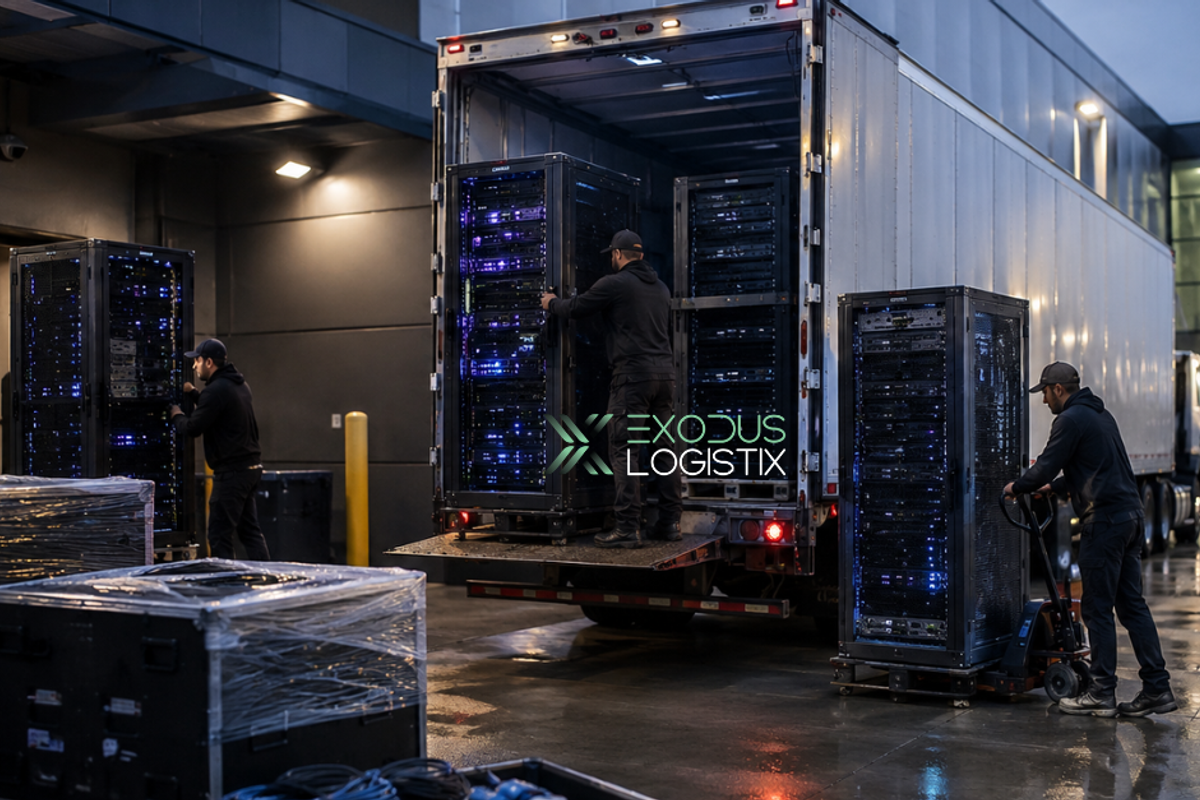
Moving infrastructure between colocation facilities is not a standard freight move.
A colo relocation involves:
- sensitive IT equipment
- strict scheduling windows
- facility access coordination
- chain-of-custody requirements
- downtime planning
- transportation risk management
And unlike traditional freight, server equipment often moves between two highly controlled environments operating on separate procedures and timelines.
That is why colocation moves require more than truck scheduling.
They require structured logistics coordination.
This checklist outlines what your freight broker needs to know before a colocation move begins — and why planning details matter long before equipment reaches the dock.
What Is a Colocation Move?
A colocation move is the relocation of IT infrastructure between:
- colocation data centers
- enterprise facilities
- cloud-connected environments
- managed hosting facilities
- hybrid infrastructure locations
This may include:
- populated server racks
- networking hardware
- storage systems
- switches and routers
- backup infrastructure
- high-value electronics
Because uptime, security, and deployment timing matter, transportation planning becomes part of the operational migration process.
Why Freight Coordination Matters in Colocation Relocation
Most colo facilities operate under:
- strict access procedures
- scheduled dock windows
- limited delivery timing
- security verification requirements
- equipment handling policies
Without coordination between:
- the shipper
- both facilities
- installation teams
- transportation providers
…small scheduling issues can quickly create operational disruption.
A freight broker coordinating a colo move should understand:
- facility timing
- transportation risk
- sensitive equipment handling
- communication requirements
- deployment sequencing
Colocation Move Checklist
1. Complete Rack and Equipment Inventory
Before scheduling transportation, document all infrastructure being moved.
This should include:
- rack quantities
- server counts
- serial numbers
- asset labels
- equipment dimensions
- weight specifications
- destination mapping
For populated server racks, inventory accuracy becomes critical for:
- chain of custody
- deployment sequencing
- receiving verification
- installation coordination
Many colo moves use rack-by-rack relocation manifests.
2. Confirm Origin and Destination Facility Requirements
Every colocation facility operates differently.
Your freight broker should verify:
- loading dock availability
- delivery appointment procedures
- elevator access scheduling
- security clearance requirements
- approved carrier policies
- certificate of insurance requirements
- unloading equipment availability
Both facilities should be coordinated before freight is dispatched.
A missed appointment window can delay:
- installation teams
- deployment schedules
- migration timelines
- downtime recovery
3. Determine Downtime and Migration Windows
Transportation scheduling should align directly with migration planning.
This includes:
- shutdown timing
- cutover schedules
- overnight migration windows
- phased equipment relocation
- deployment sequencing
In many colo relocations, freight timing affects:
- operational continuity
- customer availability
- infrastructure deployment
- system restoration timing
That makes scheduling accuracy critical.
4. Verify Air-Ride Transportation Availability
Sensitive IT infrastructure should not move like general freight.
Air-ride trailers are commonly preferred for:
- populated server racks
- storage arrays
- networking infrastructure
- fragile electronics
- high-value IT equipment
Air-ride suspension helps reduce:
- vibration exposure
- freight shock
- movement stress during transit
For many colocation moves, air-ride transportation is considered a requirement.
5. Establish Chain-of-Custody Procedures
Colocation equipment may contain:
- sensitive company data
- regulated information
- proprietary systems
- critical infrastructure
That is why chain-of-custody visibility matters throughout transportation.
Your freight broker should coordinate:
- pickup verification
- serialized tracking
- sealed trailer procedures
- monitored transportation updates
- delivery confirmation
- driver identification procedures
Operational accountability matters throughout the move.
6. Coordinate Rack Stabilization and Packaging
Even with air-ride transportation, freight preparation remains critical.
Server transportation should include:
- rack stabilization
- anti-static protection
- secure palletization
- proper weight distribution
- equipment bracing
- secure freight handling procedures
Improper packaging increases transportation risk regardless of trailer type.
7. Align Transportation With Installation Teams
Freight arrival should match deployment readiness.
Installation teams should know:
- delivery schedules
- unloading requirements
- rack sequencing
- staging procedures
- deployment priorities
Without coordination, equipment may arrive before:
- cabinets are prepared
- power systems are ready
- receiving teams are available
That creates unnecessary handling exposure and deployment delays.
8. Plan for Transportation Contingencies
Even well-planned colo moves require contingency procedures.
Potential risks include:
- weather delays
- traffic disruptions
- facility schedule changes
- equipment access issues
- route interruptions
Your freight broker should have:
- backup routing options
- escalation communication procedures
- real-time shipment visibility
- flexible scheduling coordination
The goal is not eliminating every disruption.
It is reducing operational impact when conditions change.
What Businesses Should Look for in a Freight Broker for Colo Moves
Not every freight broker is experienced with colocation logistics.
Businesses should look for providers experienced with:
- data center transportation
- air-ride freight coordination
- high-value IT equipment shipping
- chain-of-custody procedures
- facility scheduling coordination
- time-sensitive infrastructure moves
Communication is equally important.
A strong freight broker should proactively coordinate:
- shipment updates
- facility timing
- delivery scheduling
- transportation visibility
- issue escalation
Because successful colo moves depend on more than transportation alone.
They depend on operational coordination.
Common Questions About Colocation Relocation Logistics
What is the best truck type for a colo move?
Air-ride trailers are commonly preferred because they reduce vibration exposure during transportation of sensitive server equipment.
Can populated server racks be transported?
Yes, but populated racks require stabilization, secure handling, and transportation planning designed for sensitive IT infrastructure.
Why do colocation moves require scheduled dock coordination?
Most colo facilities operate with controlled access procedures, appointment windows, and security verification requirements.
Why is chain of custody important during a colo move?
Chain of custody helps maintain visibility and accountability for sensitive infrastructure throughout transportation and delivery.
Final Thoughts
A colocation relocation is not simply a freight shipment between two buildings.
It is a coordinated infrastructure move involving transportation, facility access, deployment timing, and operational continuity.
The success of the move depends heavily on how transportation is planned before equipment ever leaves the rack.
At Exodus Logistix, freight coordination is built around secure handling, structured scheduling, and operational visibility — helping businesses move sensitive IT infrastructure with greater control and reliability.
Learn More
Explore transportation solutions designed for high-value and time-sensitive freight operations:
Tags

About the Author
exodus logistix
Exodus Logistix provides freight and logistics solutions built on disciplined planning, clear coordination, and operational accountability. With experience supporting complex shipments across multiple industries, the team focuses on reducing disruption, improving reliability, and helping businesses move freight with confidence.