
Automotive Logistics: Precision Planning and Reliable Execution for Complex Supply Chains
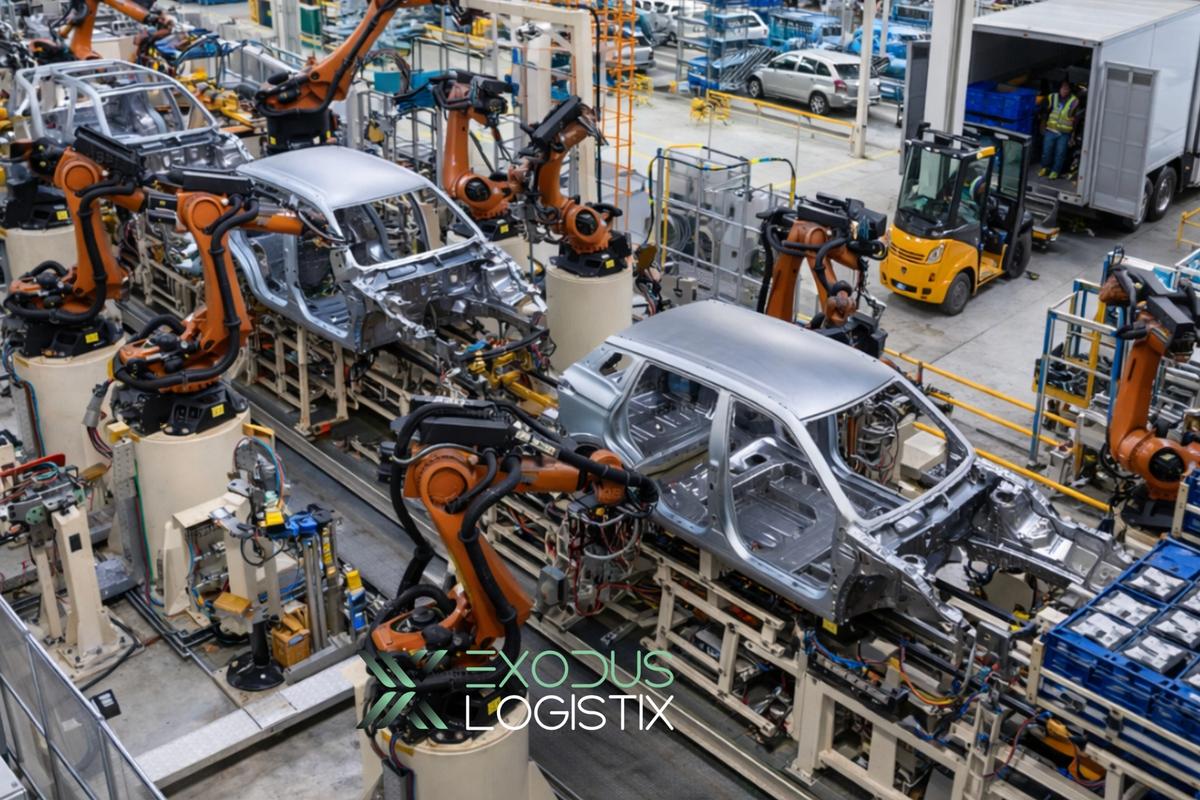
In automotive supply chains, delays and handling inefficiencies do far more than disrupt schedules — they impact production continuity, inventory accuracy, and customer satisfaction.
Automotive logistics demands coordination, predictability, and visibility across the entire freight lifecycle — from inbound components to outbound finished vehicles. These aren’t routine shipments: they are critical links in manufacturing and distribution systems built on tight schedules and exact requirements.
At Exodus Logistix, we deliver automotive logistics solutions that combine structured planning, execution visibility, and accountability — helping manufacturers, tier suppliers, and dealers keep freight flowing without costly interruptions.
What Is Automotive Logistics?
Automotive logistics refers to the specialized movement and coordination of freight associated with the design, production, and distribution of vehicles and vehicle components.
This includes:
- Inbound shipment of raw materials and parts
- Movement of subassemblies and modules
- Transportation of finished vehicles
- Aftermarket parts distribution
- Just-in-time (JIT) and Just-in-Sequence (JIS) freight
Unlike standard freight, automotive logistics must align with manufacturing processes, assembly schedules, and dealer delivery timelines — all while maintaining visibility and minimizing disruption.
The Critical Nature of Automotive Supply Chains
Modern automotive operations function on tightly linked schedules. Even minor freight delays can have ripple effects across the entire supply chain.
Prevent Production Slowdowns
Parts shortages at assembly lines can halt production, costing thousands of dollars per minute in idle time.
Meet Dealer Expectations
Finished vehicles and replacement components must reach dealers on schedule to meet consumer demand and protect brand reputation.
Support Complex Inventory Strategies
Automotive manufacturers and suppliers often operate on lean inventory models. Logistics execution must be synchronized precisely with production and inventory cycles.
This makes automotive logistics not just another freight category — but a strategic operational requirement.
How Automotive Logistics Differs from General Freight
General freight moves goods without strict linkage to internal operating rhythms. Automotive logistics, in contrast, must incorporate:
- Timing alignment with production or assembly cycles
- Coordination across multiple tiers of suppliers
- Route planning that balances speed and cost
- Real-time freight visibility
- Risk mitigation for high-cost components
These logistics programs require more than carrier access — they demand execution discipline.
Core Components of Effective Automotive Logistics
To support automotive supply chains reliably, logistics programs should include:
Detailed Freight Planning
Freight moves are mapped to production or delivery requirements with visibility into transit time, handling processes, and carrier performance.
Cross-Stakeholder Alignment
Manufacturers, suppliers, carriers, and warehouses must share clear communication and execution standards.
Real-Time Visibility
Tracking at every stage reduces uncertainty and enables faster corrective action if transit conditions change.
Carrier Selection & Capacity Management
Choosing carriers with proven performance, proper equipment, and strong communication capabilities ensures reliability on every shipment.
Accountability Throughout Execution
From dispatch to delivery confirmation, structured oversight ensures expectations are met and documented.
This operational framework builds predictability into automotive freight — a key differentiator in logistics performance.
When You Should Use Specialized Automotive Logistics
Automotive logistics solutions are essential when:
- Production schedules depend on on-time part delivery
- Inventory strategies require precise timing
- Finished vehicles must reach dealers by specific windows
- High-value or sensitive components need careful handling
- Tier suppliers and OEMs coordinate complex freight flows
In each case, logistics becomes more than transportation — it becomes a strategic contributor to operational performance.
Technology and Data in Automotive Logistics
Modern automotive logistics leverages tools that enhance:
- Shipment tracking
- ETA visibility
- Route optimization
- Exception reporting
- Multi-party communication
This integration enhances decision-making and reduces the likelihood of costly disruptions.
Exodus Logistix uses data visibility protocols and coordinated communication tools to support freight execution across the automotive ecosystem.
Final Perspective: Execution Protects Performance
Automotive logistics is not a one-size-fits-all service. It requires planning, coordination, and operational discipline tailored to supply chain complexity.
When logistics is executed with rigor:
- Production continuity improves
- Inventory risk decreases
- Delivery performance becomes predictable
- Supplier relationships strengthen
Exodus Logistix helps automotive shippers build logistics programs that support production realities and protect margins.
Learn more about our automotive logistics solutions:👉 https://exoduslogistix.com/industries/automotive
Tags

About the Author
exodus logistix
Exodus Logistix provides freight and logistics solutions built on disciplined planning, clear coordination, and operational accountability. With experience supporting complex shipments across multiple industries, the team focuses on reducing disruption, improving reliability, and helping businesses move freight with confidence.