
Asset Recovery Logistics: Turning Excess Inventory Into Controlled Outbound Flow
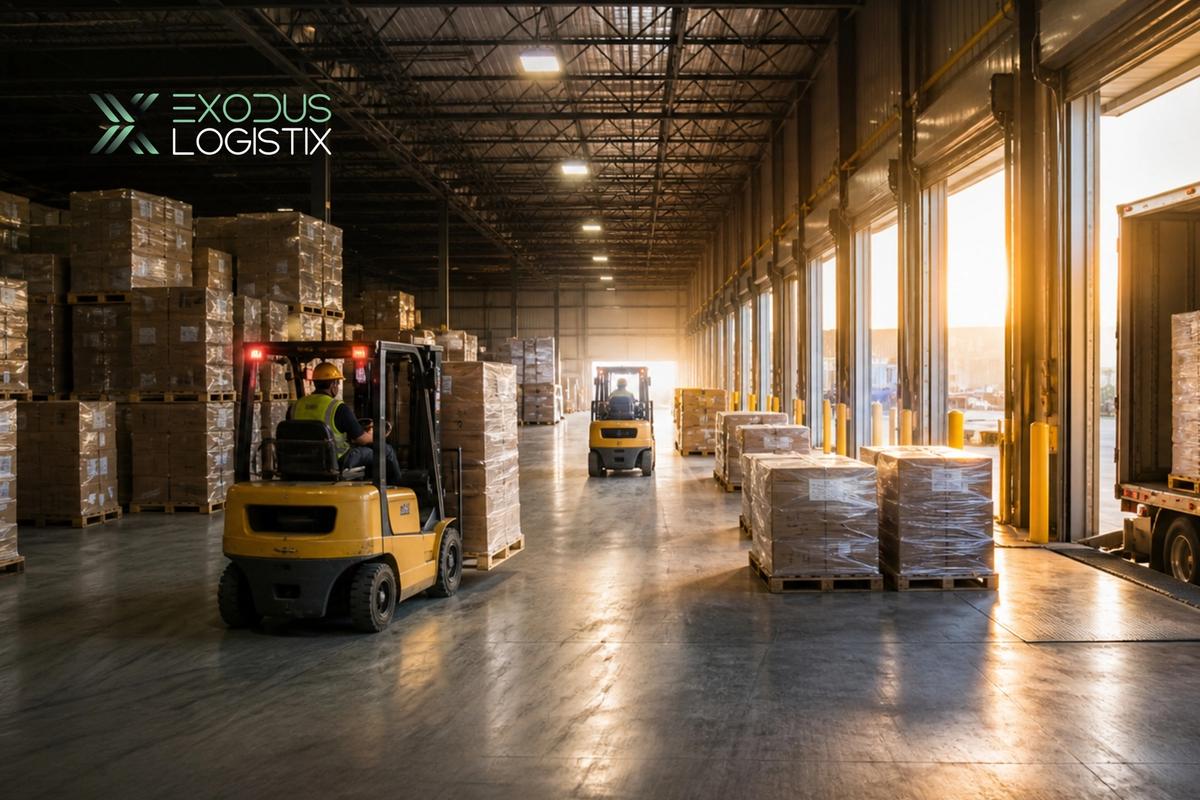
Excess inventory doesn’t disappear.
It accumulates.
Across warehouses. Across locations. Across reporting cycles.
And when it builds up, it doesn’t just take space — it reduces flexibility across your entire operation.
Asset recovery logistics is how that pressure is released.
Not by reacting to excess inventory. But by structuring how it moves.
¡
What Is Asset Recovery Logistics?
Asset recovery logistics is the coordinated movement of excess, obsolete, or returned inventory out of primary operations and into secondary channels.
This includes:
- liquidation freight
- redistribution to alternative markets
- returns consolidation and processing
But its real function is not disposal.
It’s capacity restoration.
When inventory that no longer supports demand is moved out efficiently, space, labor, and throughput are recovered for active operations.
Why Excess Inventory Becomes an Operational Risk
Most businesses treat excess inventory as a storage issue.
It isn’t.
It’s a flow issue.
When inventory sits:
- staging areas become congested
- dock efficiency drops
- outbound freight slows down
- labor productivity decreases
Over time, this creates a system where:
- decisions become reactive
- throughput declines
- costs increase
The longer inventory remains static, the harder it is to restore normal operations.
From Inventory Management to Flow Management
Traditional inventory strategies focus on control.
High-performing operations focus on movement.
This shift changes how excess inventory is handled:
- from storing → to moving
- from reacting → to planning
- from clearing → to structuring
Asset recovery logistics becomes part of the system — not an afterthought.
How Asset Recovery Logistics Improves Operations
When structured correctly, asset recovery logistics drives measurable performance gains:
1. Restores Warehouse Capacity
Removing excess inventory frees space for active goods and reduces congestion.
2. Improves Throughput
Less clutter means faster staging, handling, and outbound processing.
3. Reduces Operational Friction
Teams operate more efficiently without navigating blocked or overcrowded areas.
4. Supports Consistent Flow
Outbound movement becomes predictable instead of reactive.
The Role of Transportation in Asset Recovery
Asset recovery strategies fail without execution.
Transportation is what makes recovery possible.
It enables:
- scheduled removal of excess inventory
- consolidation of outbound liquidation freight
- alignment with available capacity
Without structured transportation: inventory remains in place
With it: inventory becomes movement
Designing Asset Recovery Into Daily Operations
Asset recovery logistics should not be event-based.
It should be continuous.
This includes:
Inventory Segmentation
Identifying slow-moving or excess inventory early.
Scheduled Outbound Movement
Planning regular recovery shipments instead of one-time clear-outs.
Transportation Alignment
Integrating recovery freight into existing routes and capacity.
Network Coordination
Ensuring multiple facilities operate within the same recovery framework.
This turns asset recovery into a system — not a disruption.
Asset Recovery Across Multi-Facility Networks
In distributed operations, excess inventory doesn’t stay isolated.
It spreads.
One congested location impacts:
- inbound scheduling
- outbound flow
- network balance
Coordinated asset recovery logistics ensures:
- consistent capacity across locations
- aligned transportation planning
- stable system-wide performance
When to Implement Asset Recovery Logistics
Asset recovery becomes critical when:
- warehouse space is consistently constrained
- outbound flow slows due to congestion
- excess inventory cycles increase
- operations become reactive instead of planned
In these cases, structured recovery is not optional.
It’s necessary.
Conclusion: Movement Restores Control
Asset recovery logistics is not about clearing inventory.
It’s about restoring control.
When excess inventory moves:
- capacity returns
- flow improves
- operations stabilize
At Exodus Logistix, asset recovery logistics is built around structured transportation — ensuring excess inventory moves consistently, efficiently, and without disrupting core operations.
Learn More
Explore how structured logistics solutions support asset recovery and continuous outbound flow: 👉 https://exoduslogistix.com/services/
Tags

About the Author
exodus logistix
Exodus Logistix provides freight and logistics solutions built on disciplined planning, clear coordination, and operational accountability. With experience supporting complex shipments across multiple industries, the team focuses on reducing disruption, improving reliability, and helping businesses move freight with confidence.