
Asset Recovery & Liquidation Freight: Preventing Warehouse Congestion and Unlocking Capacity
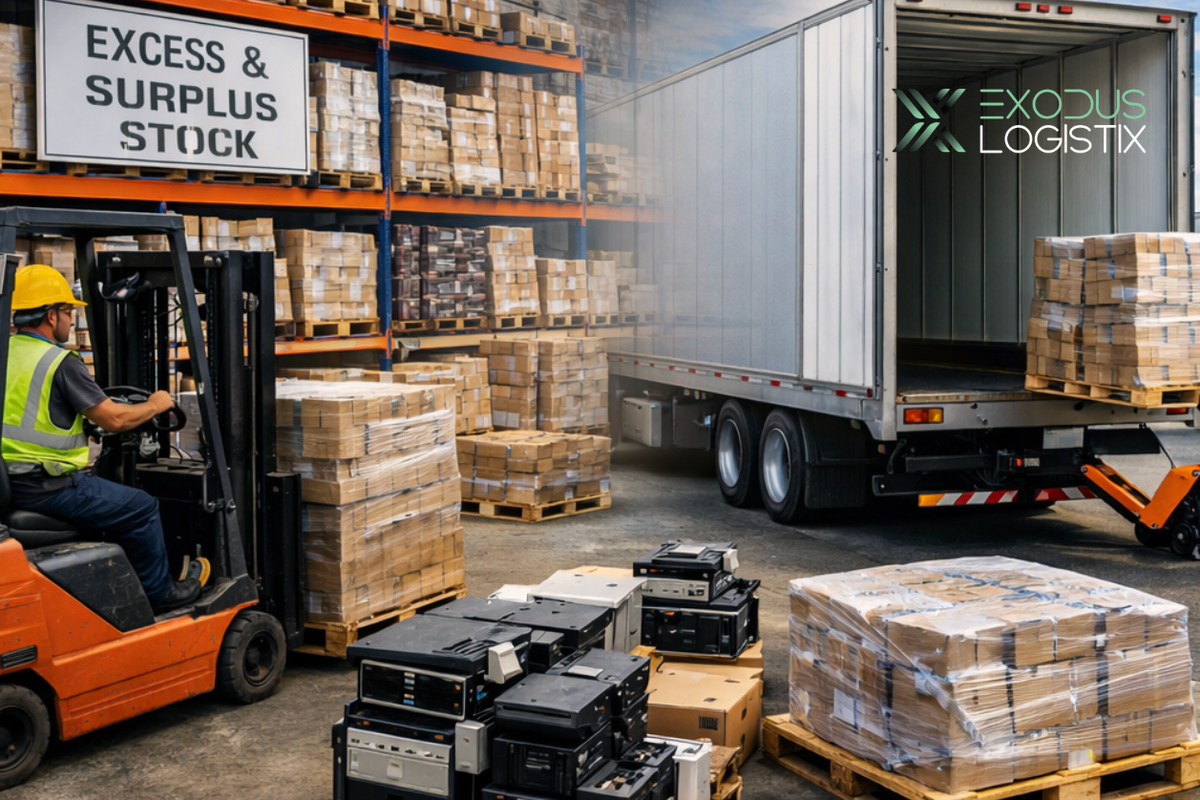
Warehouse space is one of the most limited resources in a supply chain.
When excess inventory begins to accumulate, it doesn’t just take up space — it affects how the entire operation performs.
Inactive stock, returned goods, and discontinued products can quickly reduce available capacity, slow down handling processes, and disrupt outbound freight movement.
Asset recovery and liquidation freight play a critical role in preventing these issues by ensuring excess inventory is moved efficiently and consistently out of the system.
Why Warehouse Congestion Impacts Supply Chain Performance
Distribution centers are designed for flow, not storage.
When inventory remains idle for extended periods, it creates operational friction:
- reduced space for inbound shipments
- slower picking and staging processes
- congestion at loading docks
- increased labor inefficiencies
As congestion builds, even routine operations become more difficult to execute.
The result is not just a storage problem — it becomes a performance issue across the entire supply chain.
How Asset Recovery Supports Warehouse Efficiency
Asset recovery and liquidation freight provide a structured way to remove non-moving inventory from active storage.
Instead of allowing excess goods to accumulate, businesses can:
- identify slow-moving or obsolete inventory
- consolidate products for outbound movement
- route shipments to appropriate secondary channels
- maintain continuous inventory flow
By treating excess inventory as active freight rather than static stock, warehouses remain optimized for operational efficiency.
Integrating Liquidation Freight Into Daily Operations
One of the most effective ways to manage excess inventory is to integrate liquidation freight into existing transportation programs.
This includes:
Scheduled Removal of Excess Inventory
Rather than waiting for inventory to build up, regular outbound movement prevents congestion before it starts.
Coordinated Routing
Liquidation freight can be aligned with existing routes to reduce unnecessary transportation costs.
Load Consolidation
Combining multiple sources of excess inventory into a single shipment improves efficiency and reduces handling.
Continuous Flow Management
Maintaining a steady flow of outbound excess inventory ensures warehouses operate within capacity.
When integrated properly, asset recovery becomes part of the daily logistics process rather than a reactive solution.
The Role of Transportation in Clearing Inventory
Transportation is the mechanism that turns excess inventory into movement.
Without coordinated freight execution, inventory remains static — regardless of how well it is identified or categorized.
Effective transportation planning allows businesses to:
- move excess inventory without disrupting outbound shipments
- maintain consistent dock scheduling
- optimize trailer utilization
- align recovery freight with carrier availability
This ensures that asset recovery operations support, rather than interfere with, ongoing supply chain activity.
Benefits of Proactive Asset Recovery Strategies
When asset recovery and liquidation freight are managed proactively, businesses gain measurable advantages:
Increased Warehouse Capacity
Removing inactive inventory frees up space for higher-priority goods.
Improved Operational Flow
Reduced congestion allows for faster handling and staging.
Lower Storage Costs
Minimizing excess inventory reduces long-term storage expenses.
More Efficient Transportation
Structured freight movement improves load planning and routing efficiency.
Stronger Supply Chain Performance
Operations remain consistent, even as inventory levels fluctuate.
Supporting High-Volume Distribution Networks
For businesses operating across multiple warehouses and distribution centers, managing excess inventory requires a coordinated approach.
Asset recovery strategies must be scalable, ensuring that:
- inventory is consistently identified and removed
- transportation schedules align with operational demand
- warehouse capacity remains balanced across locations
This level of coordination allows supply chains to remain efficient, even during periods of high volume or shifting demand.
Maintaining Flow Across the Supply Chain
Supply chain efficiency depends on continuous movement.
When inventory stops moving, performance begins to decline.
Asset recovery and liquidation freight ensure that even non-standard inventory continues through the system — preventing bottlenecks and maintaining operational flow.
At Exodus Logistix, transportation programs are structured to support continuous movement, including the efficient handling of excess and liquidation freight.
To learn more about how structured transportation solutions support efficient inventory movement, visit: 👉 https://exoduslogistix.com/services/
Tags

About the Author
exodus logistix
Exodus Logistix provides freight and logistics solutions built on disciplined planning, clear coordination, and operational accountability. With experience supporting complex shipments across multiple industries, the team focuses on reducing disruption, improving reliability, and helping businesses move freight with confidence.