
Air-Ride vs. Standard Dry Van: Why It Matters for Server Rack Shipping
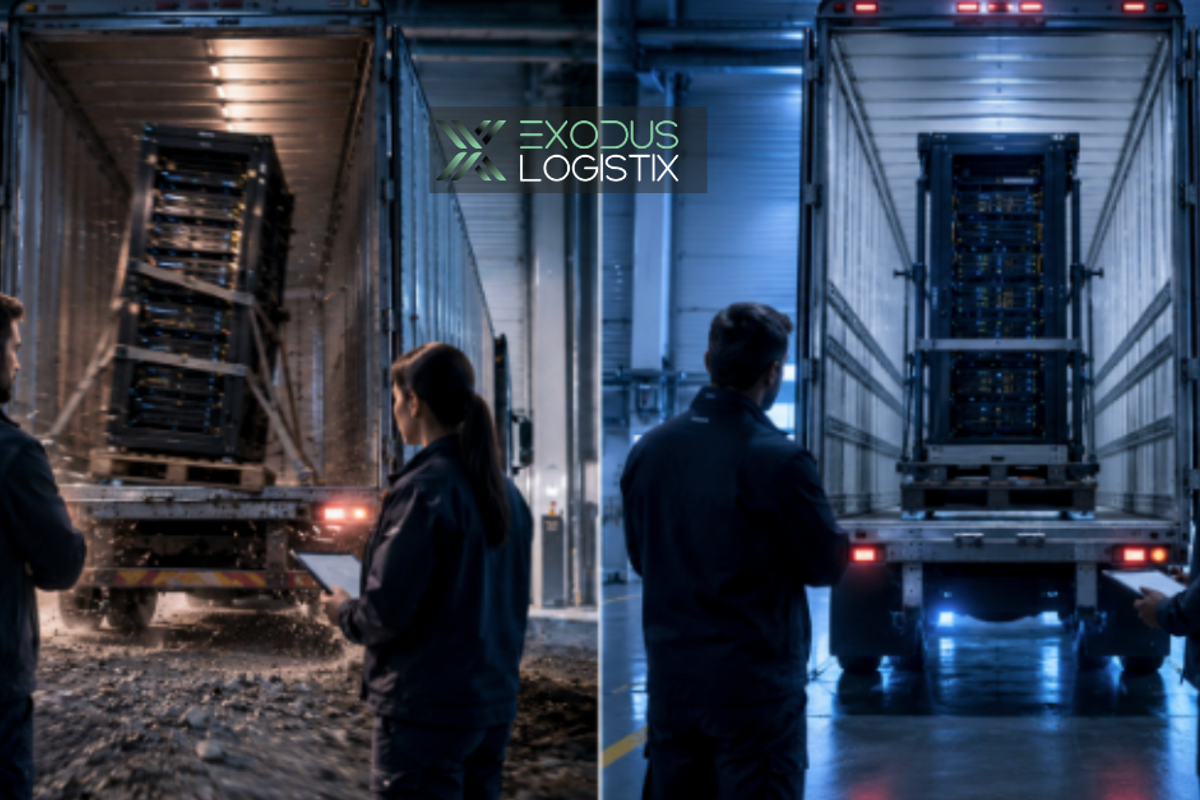
Moving server racks is not the same as moving standard freight.
Data center equipment is highly sensitive to:
- vibration
- road shock
- sudden movement
- handling exposure
- transportation instability
That is why the type of trailer used during transportation matters more than many businesses realize.
For data center relocations, colocation moves, and high-value IT equipment shipping, one of the most important transportation decisions is: Should the freight move on an air-ride trailer or a standard dry van?
The answer can directly affect:
- hardware reliability
- equipment safety
- operational continuity
- deployment timelines
- freight damage risk
This guide explains the difference between air-ride and standard dry van transportation, why vibration matters for server equipment, and when air-ride transportation should be considered a requirement.
What Is an Air-Ride Trailer?
An air-ride trailer uses an air suspension system instead of traditional steel spring suspension.
Compressed air cushions the trailer during transit, helping reduce:
- road vibration
- trailer bounce
- freight shock
- sudden impact movement
This creates a smoother ride compared to standard dry van transportation.
Air-ride transportation is commonly used for:
- server racks
- medical equipment
- laboratory equipment
- electronics
- sensitive manufacturing systems
- high-value freight
The goal is ride stability.
What Is a Standard Dry Van?
A standard dry van is the most common trailer type used in freight transportation.
Most dry vans use traditional suspension systems designed for general cargo movement.
They work well for:
- palletized freight
- retail shipments
- packaged goods
- durable inventory
- general transportation
However, standard dry vans typically transfer more road vibration and shock into the trailer during transit.
For many freight types, this is not a major issue.
For sensitive IT equipment, it can be.
Why Vibration Matters in Server Rack Shipping
Server racks and data center equipment contain highly sensitive internal components.
Excessive vibration during transportation can increase risk to:
- hard disk drives (HDDs)
- storage arrays
- networking hardware
- mounted components
- cable connections
- rack stability
Even when equipment appears externally undamaged, repeated vibration exposure can create internal stress during transit.
This becomes especially important during:
- long-distance moves
- rough road conditions
- populated rack transportation
- high-value equipment relocations
That is why ride quality matters during server transportation.
HDD vs SSD Transportation Sensitivity
Not all storage hardware responds to transportation vibration the same way.
HDD (Hard Disk Drive) Risk
Traditional hard disk drives contain spinning mechanical components.
Excessive vibration or impact can increase the risk of:
- drive failure
- internal damage
- read/write instability
- shortened lifespan
For legacy systems or populated storage environments, vibration reduction becomes critical.
SSD (Solid State Drive) Stability
Solid state drives are generally more resistant to vibration because they do not contain moving mechanical parts.
However, SSD-based infrastructure still includes:
- mounted circuit boards
- networking components
- power systems
- rack-mounted hardware
That means transportation stability still matters even in modern SSD environments.
Air-Ride vs Standard Dry Van: The Core Difference
The biggest difference is ride quality during transit.
Air-Ride Trailer
Standard Dry Van
Reduced vibration exposure
Higher road vibration transfer
Better freight shock absorption
Less suspension cushioning
Smoother transportation conditions
Standard freight ride quality
Preferred for sensitive equipment
Designed for general cargo
Better for populated server racks
Higher movement exposure
For server transportation, vibration control is often more important than speed alone.
When Air-Ride Transportation Should Be Required
Air-ride transportation is strongly recommended for:
- populated server racks
- storage arrays
- sensitive networking hardware
- high-value IT infrastructure
- long-distance data center relocation
- colocation facility moves
- fragile electronic systems
Many enterprise relocation teams require air-ride transportation as part of their freight specifications.
This is especially common in:
- financial services
- healthcare infrastructure
- cloud computing environments
- enterprise data centers
- regulated industries
For critical infrastructure, transportation stability becomes part of risk management.
Why Rack Stabilization Still Matters
Air-ride trailers reduce vibration exposure.
But they do not eliminate the need for proper freight preparation.
Server shipping should still include:
- rack stabilization
- secure palletization
- anti-static protection
- proper weight distribution
- equipment bracing
- freight securement procedures
Transportation quality depends on both:
- the trailer
- the preparation process
Common Mistakes During Server Transportation
Some of the most common server shipping issues include:
- using standard freight procedures for sensitive equipment
- inadequate rack stabilization
- poor packaging protection
- improper trailer selection
- lack of chain-of-custody visibility
- insufficient delivery coordination
Many transportation problems occur before the trailer even leaves the facility.
That is why planning matters as much as equipment selection.
What Businesses Should Look for in a Freight Partner
Not every transportation provider understands data center logistics requirements.
Businesses moving sensitive IT infrastructure should look for freight partners experienced with:
- air-ride transportation
- server rack shipping
- chain-of-custody procedures
- high-value freight coordination
- data center relocation logistics
- time-sensitive delivery scheduling
Communication also matters.
Data center transportation often involves:
- strict facility scheduling
- limited downtime windows
- coordinated installation timing
- secure receiving procedures
Strong transportation coordination reduces operational risk throughout the move.
Common Questions About Air-Ride Transportation
What is the best truck type for data center equipment?
Air-ride trailers are commonly considered the best transportation option for sensitive server racks and data center equipment because they reduce vibration and road shock during transit.
Can server racks be moved in a standard dry van?
Yes, but standard dry vans generally create more vibration exposure compared to air-ride transportation.
Is air-ride transportation necessary for SSD servers?
SSD infrastructure is less vibration-sensitive than HDD systems, but air-ride transportation is still preferred for overall equipment protection and ride stability.
Are populated server racks safe to transport?
Yes, but populated racks require proper stabilization, securement, and transportation planning to reduce movement risk during transit.
Final Thoughts
Choosing the right trailer type for server transportation is not simply a freight decision.
It is an infrastructure protection decision.
Air-ride transportation helps reduce vibration exposure, improve ride stability, and support safer movement for sensitive IT equipment during data center relocations and server rack shipping.
At Exodus Logistix, transportation coordination is built around high-value freight visibility, secure handling practices, and operational reliability — helping businesses move critical infrastructure with greater confidence and control.
Learn More
Explore transportation solutions designed for high-value and time-sensitive freight operations:
Tags

About the Author
exodus logistix
Exodus Logistix provides freight and logistics solutions built on disciplined planning, clear coordination, and operational accountability. With experience supporting complex shipments across multiple industries, the team focuses on reducing disruption, improving reliability, and helping businesses move freight with confidence.